1 May 2012

BFE 2012 Annual Conference in Poland

We are very excited to be holding our 16th Annual Conference in Poland for the first time. It is scheduled to take place September 11-15, 2012 in Rzeszów, Poland. 

More details on individual workshops will be available in the coming weeks and months and we will share them on the blog and on our website. For now, here's a taste of Polish culture for you to enjoy. Remember, if you have any questions about the conference, send an email to Kayla Lane our Conference Coordinator at conferences@bfe.org.

Hope to see you there!


20 April 2012

Cancer Prevention, Treatment, Choices and Hope

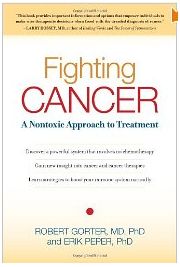
On April 25th, Dr. Erik Peper will be presenting a webinar on biofeedback and cancer based on his latest book; Fighting Cancer-A Non Toxic Approach to Treatment which was co-authored with Robert Gorter, M.D., Ph.D. The book describes a new paradigm of understanding and treating cancer by focusing on mobilizing and activating the immune system.

One in two people will get cancer, one in three will die of it—What can you do? The webinar explores the need for a new prevention and treatment paradigm. It overviews cancer risk factors, strategies to mobilize the immune system through self-care, and the Gorter protocol.

If you, your patients, or any of those you love are dealing with cancer, this is an excellent opportunity for discovery, and to enjoy Dr. Peper’s always spellbinding presentation. 

Cancer Prevention, Treatment, Choices and Hope
Presenter: Dr. Erik Peper
Date: April 25, 2012
Time: 12:00-1:00 PM Eastern Time (US & Canada)
Click here for more information.

Erik Peper, Ph.D. is an international authority on biofeedback and self-regulation. He is Professor at the Institute for Holistic Healing Studies / Department of Health Education at San Francisco State University. He is President of the BFE and past President of the Association for Applied Psychophysiology and Biofeedback. Dr. Peper’s best-selling book “Muscle Biofeedback at the Computer,” is a practical manual used by San Francisco State University as part of its program for which Dr. Peper received the 2004 California Governor’s Safety Award. For more information on maintaining energy and health at work and a series of healthy computing tips, visit Dr. Peper’s blog The Peper Perspective.

'

19 April 2012

BFE-LFB (Learn From the Best) Program and NRBS Conference

Over the past couple months we've been working with Cindy Perlin, president of the Northeast Regional Biofeedback Society, to promote their annual conference that takes place this weekend. The topic of this year's meeting is:

Realizing the Potential of Biofeedback: 
An International Call to Action
April 20-22, 2012

They sum up the purpose of the meeting like this...
"We all know the power of biofeedback and neurofeedback to change people’s lives for the better. It is safe, effective and lower cost over time than virtually any alternatives. Yet it is a relatively unknown treatment, rarely mentioned in the media. This conference will address how to increase biofeedback’s visibility and get treatment to more people, while expanding our individual practices and the field. If you’re passionate about biofeedback and its potential, please join us to make a difference!"

Anyone working in the field knows of the challenges we face as an industry. Part of the BFE's mission as a non-profit community interest company is to promote the field of biofeedback both internationally and regionally. To achieve that objective, we promote the work of our affiliates through social media, press releases, blogs. Our Program Director, Mark Schwartz will be presenting a workshop on "Marketing of Biofeedback on the Internet" and looks forward to seeing you there.

And just as a reminder, the NRBS welcomes members from around the world. Click here for information on joining their society.

Thank you to the NRBS for leading the way on this important topic!

22 February 2012

Biofeedback in Israel

Recently, Dr. Erik Peper traveled to Israel to present a series of workshops on biofeedback. The event was organized by the Israeli Biofeedback-Neurofeedback Association (IBNA). As one of the sponsors of the event, we had the pleasure of working with the members of the IBNA to help promote the workshops. Yuval Oded, a member of the IBNA commented, "Erik is a wonderful human being and an outstanding teacher. As a real master in  integrative approaches to healing, his workshops here not only greatly expanded our knowledge in biofeedback but also affected many of us in our general attitude towards therapy by emphasizing
the role emotional memories and patterns, and interactions of body, mind, social and physical environment for achieving long term results in optimizing performance and health. Erik generously shared his clinical wisdom with us, teaching many practical techniques for increasing self awareness, fostering control and self mastery skills, taking charge and actively participating in ones own healing process. The workshops were not only theoretical. Erik gave us many impressive demonstrations using biofeedback on how to promote health."


Day 1 - Wednesday, January 11th
Making the Invisible Visible with Biofeedback as a Diagnostic and Self Mastery Tool

The workshop focused on integrating biofeedback with cognitive, somatic and imagery techniques. The biofeedback includes analysis of dysponetic muscle patterns, dysfunctional respiratory patterns in clients and training strategies to optimize performance and health. The biofeedback treatment strategies can be used in numerous disorders such as panic and anxiety, recurrent abdominal pain, asthma, muscle dysfunction, hypertension, autonomic disregulation disorders, PTSD and pain.


Day 2 - Thursday, January 12th
Integrated Biofeedback to Manage Stress and to Optimize Health

Dr. Peper discussed the use of respiration biofeedback and other modalities (temp, SEMG, SCL, HRV) for stress management and for reducing pain, panic, anxiety and increasing performance.

Day 3 - Friday, January 13th
From Technostress to Technohealth

This course focused on teaching practitioners how to prevent computer-related disorders and presented a comprehensive approach covering workstation ergonomics, corporate culture work environment, individual work style, work/rest patterns and psychophysiological predisposition. An emphasis is placed on utilizing surface EMG to take the guesswork out of assessment, monitoring, and training.
 
The workshops were co-sponsored and in collaboration with:
SAN Society for Applied Neuroscience (www.applied-neuroscience.org)
Psy-Phi Advanced Psychological Solutions (www.psy-phi.co.il)
Medtechnica (www.medtechnica.co.il)

Comments on the workshop...

“Dr. Pepers' contribution to the field of applied psychophysiology and Biofeedback over the past 40 years is huge. What I have learned from him as a student in many of his BFE workshops, has first of all, changed the way I cope with stress."
--Yuval Oded

"The ability to teach in a way that the participants not only learned new tools for their practice but also for the clinicians themselves, is one of the major strengths of Erik. He made everybody understand and feel hands on that clinicians need to experience Biofeedback themselves in order to be good clinicians."
--Daniela Gräfin von Der Schulenburg-Ortner

The BFE looks forward to working with the IBNA again in the future to promote biofeedback and neurofeedback in Israel.

.

18 January 2012

BFE 2011 Annual Conference

We have just confirmed the dates for our 2012 Annual Conference. This year the conference will be held September 11-15, 2012 in Rzeszów, Poland.

For more information, as well as submissions of workshop proposals, submissions for the scientific program (symposia, lectures, papers, posters, short courses) and questions about industrial exhibition please contact:
Monika Fuhs, Program Chair: editor@bfe.org,
or visit our homepage www.bfe.org

Submission deadlines:
March 1, 2012 workshops and short courses, invited talks
April 15, 2012 symposia and paper session
May 1, 2012 posters and oral presentations

We look forward to seeing you there!

9 December 2011

Beating Holiday Stress With Biofeedback

Every year at this time the media features articles about holidays and stress.  This can indeed be a hectic time of year, but it doesn’t have to be stress filled. The Mayo Clinic’s website offers a list of coping strategies, including one that focuses on breathing:

“Take a breather. Make some time for yourself. Spending just 15 minutes alone, without distractions, may refresh you enough to handle everything you need to do. Take a walk at night and stargaze. Listen to soothing music. Find something that reduces stress by clearing your mind, slowing your breathing and restoring inner calm.”  Click here for full article.

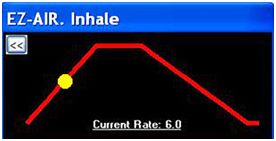
As we approach the holidays, I thought it would be a good time to remind all the followers of this blog about the BFE’s EZ-AIR PLUS software program.  EZ-AIR PLUS is a software program published by the BFE to help you breathe better when sitting at your computer. It allows you to place a thin bargraph or linegraph anywhere on your computer screen to help you pace your inhalation and exhalation. You can let it run continuously on screen (with or without sound) or you can schedule "breaks" throughout your day to regulate breathing. 


As health professionals, you know the importance of proper breathing and the benefits it can provide to your clients. EZ-AIR PLUS is an ideal way for your clients to practice relaxation techniques at home. We offer a free 30-day trial on our website at www.bfe.org. After the 30-day period, the software can be purchased for $19.95 USD. Proceeds from the sale of EZ-AIR PLUS help to support the work of our foundation. Click Here to view EZ-Air Plus Promo.

The Physiology of Breathing
Breathing is a natural process which occurs without conscious control. Babies and young children breathe effortlessly. Most of the movement associated with their breathing occurs primarily in the lower abdominal area. As they exhale, their abdomen (stomach) goes in slightly. When they inhale, they abdomen expand outward and to the sides. Most adults, however, no longer breathe in this healthy pattern. Instead, they hold their stomach rigid or slack and use a significant amount of upper body muscular activity to inhale.

The major muscle involved in proper breathing is called the diaphragm. This is a dome shaped muscle located beneath the ribs and above the stomach. In order to inhale, the diaphragm tightens and flattens. This activity displaces the liquid contents of the abdomen and thereby creates a larger space in the chest. As this space is created, the pressure in the atmosphere exceeds the pressure in the chest and air flows in to balance these pressures out.

To exhale, the diaphragm must relax and be raised upward, compressing the air in the chest and allowing the air to be expired. Thus, inhalation requires that the abdominal area relax and expand, while exhalation requires the abdominal area to decrease in diameter. The chest and shoulders should stay relaxed throughout the breathing cycle.

From the manual “Breathing for Health With Biofeedback”  by Dr. Erik Peper

 EZ-AIR PLUS. It is a great way to relax, reduce stress and a reminder to do something good for ourselves during this busy time of year!

11 October 2011

Thank You for Visiting Us at ISNR!

Thank you to everyone who stopped by to visit us at ISNR.We hope you learned a little bit about us and the online educational opportunities at the Biofeedback Foundation of Europe. We look forward to see you online soon!

Here is part 3 of our recent interview with Francois Dupont in which he talks about his current work on several BFE teams and what is coming in the future.

You have also collaborated on the creation of the BFE TBI Suite which is currently being developed.
One philosophy of the BFE is to bring different people together to work on common project. The TBI (Traumatic Brain Injury) suite is one of these projects. Drs. John Davis and Robert McCarthy and I have met a number of times to start organizing information about instruments to assess TBI, resources for people who have suffered TBI and the type of EEG assessment needed for this condition. Traumatic brain injury is different from conditions like attention deficit disorder in the sense that with ADHD there are some typical configurations or presentations in terms of brainwave activity. Since traumatic brain injury is the result of an injury that can affect any part of the brain – there is nothing typical about it. For example, sometimes we see the brain of a person who was hit on the left side to be mostly affected on the right side because of what we call the contra-coup. The brain essentially moved from one side of the skull to the other side during the accident. For this reason, we need to do a more extensive assessment and in most cases we would recommend to do a full QEEG with 19 channels. We are exploring what would be the best type of training screens to adjust easily to this unfortunate condition.

I know there are suites for ADHD and Attention in the works. Can you tell me a bit about those?
I am also currently working with Dr. Vincent Monastra and Dr. Joel Lubar on two suites for ADHD and Attention. These men were very happy to learn that for some years I have been using a scripted session that replicates the steps needed for their assessment of ADHD. As a team, we improved this software greatly. For instance, there is now an Excel report automatically created at the end of the assessment with graphs using the published norms of their famous Theta/Beta power ratio. This suite is the perfect example of the usefulness of the scripted session. The reason for this is that their ratio has been regularly misused in the field. For example, many people record the theta/beta ratio with eyes closed, which was never part of the actual protocol by Monastra, Lubar and their collaborators. This script function allows us to reproduce the exact conditions set by these pioneers in their published research. A person using the script will essentially reproduce exactly what Dr. Monastra and Lubar have done to create the norms for the theta/beta ratio. There is standardized text to be read by the client and the audio recording for the listening task is played automatically in the assessment script. Both are based on age group. The BFE plans to create versions in many languages.

What specific challenges do these topics provide?
Dr. Monastra and I are working on different ways to present feedback for children who have attention problems. We are exploring new functions such as flash games that are appealing to a younger audience. With Dr. Monastra’s expertise in the field of attention, we hope to find ways to make the training faster and more efficient.

Dr. François Dupont is a registered psychologist with competence in general, health, and rehabilitation psychology. In his private practice in Ottawa, he often combines bio/neurofeedback with techniques borrowed from cognitive-behavioural, dynamic-humanistic and experiential approaches. Involved with the BFE for more than a decade, he has developed software suites such as: Infiniti for The Learning Curve (TLC), Integrated Neurofeedback, and Monastra-Lubar Theta/Beta Assessment. His expertise as a clinician combined with his software knowledge make Francois an ideal contributor to BFE Software Suites.

Special thanks to Dr. Dupont for granting us the time for this interview and for all the work he has done in collaboration with several BFE-IREP teams.

JOIN OUR MAILING LIST!
To stay up-to-date on new products available in our online shop, including software, classes, webinars and workshops feel free to join our mailing list. Click here to sign up.
 
Related Posts Plugin for WordPress, Blogger...