Showing posts with label stress. Show all posts

14 May 2014

Biofeedback for Mental Health

I'm Blogging for Mental Health.We are "blogging for mental health" to talk about an adjunctive treatment that clinicians around the world use in their practice's every day, but is not widely known. Special thanks to the American Psychological Association for organizing this event and to everyone who has chosen to take part and share their voice. 

There are a variety of approaches used by mental health practitioners to treat mental illnesses. They include: pharmacological, psychodynamic, cognitive behavioral and interpersonal. There are also a number of therapy formats: individual therapy, group therapy, couple's therapy and family therapy. The variety of approaches and formats allow clinicians to tailor their approach to suit the clients' needs. 

One technique that we don't hear much about is biofeedback. Biofeedback is a process by which an individual can learn how to change physiological activity in order to improve their health and performance.

"If you can't measure it, you can't improve it."
William Thomson, 1st Baron Kelvin (yup, he's the guy they named the unit of measure after) once said, "If you can't measure it, you can't improve it." Well, biofeedback allows one to do precisely that. During a biofeedback session, physiological activity such as skin temperature, heart rate, respiration, muscle tension and brainwaves are monitored and the information is fed back to the therapist and user. 

As a counsellor, one employs a variety of cognitive strategies with their clients because some respond better certain techniques over others. Adding biofeedback to the toolbox can enhance the efficacy of other therapeutic techniques. For example, monitoring a person's stress response during breath training, an autogenic session or guided imagery can confirm whether they are actually relaxing or if they are gaining no benefit. In the biofeedback image example below, the anxious subject is coached to relax in order to make the tree grow. As they activating their parasympathetic nervous system, their finger temperature rises, and the animated tree grows.


There are many applications for biofeedback and mental health. This past February at our annual meeting in Venice, Italy, presenters discussed the use of biofeedback for ADHD, OCD, Aspergers and Autism, Stress, Addictions, Anxiety and Depression among other topics. Whether you are a clinician, someone with a mental health challenge or someone who wants to learn ways to keep stress at bay and maintain good mental health, we invite you to learn more about biofeedback!

A great introduction to the subject can be found on YouTube at: 
https://www.youtube.com/watch?v=a53LA7aL2Og

We invite you to view a recent webinar presented by Linda Walker, MHR, LPC, BCN, BCB on How Biofeedback Benefits Your Clients and Your Practice.
https://vimeo.com/94453638


14 December 2012

Coping With Workplace Stress During the Holiday Season

I recently read a timely article by Judy Martin in Forbes magazine on "5 Keys to Transform Workplace Holiday Stress from the Inside Out". (Read the full article here.) This time of year can be even more hectic than usual with "out of the office" responsibilities demanding more of our time and thoughts. I particularly liked Judy's second point in the article:
"Breathe: That’s it folks, but with a twist. We need reminders. I put a post-it with the word “Breathe” right on my computer screen. Here’s another suggestion, set an alarm for the top of the hour, when it strikes, three deep belly breathes, releasing slowly. Then hold out the last breath for a few seconds. You’ll be surprised how energizing it can be, while calming your nerves. This is the one elixir that can spark the speediest positive response to stress."
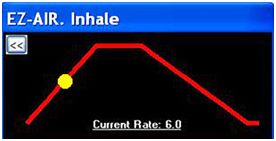
This is exactly what the BFE's EZAir Plus software does. For those of you who are unfamiliar with the software, EZAir Plus is a breath pacer that allows the user to place a linegraph or bargraph on their computer screen so that breathing can be paced optimally at 6 breaths per minute. Breathing slowly seems like such an easy thing to do, but when faced with deadlines, full email in-boxes and massive to-do-lists it becomes a real challenge to remember to do it!

 I think the nicest feature of the software is that it can be set up to pop up on screen once an hour for five minutes thereby providing the reminder that Judy mentions in her article. And when the software starts, most often you will see that you are breathing much faster than you think. A couple minutes following along with EZAir and your breathing returns to the optimal rate.


If you are not currently using the program, we invite you to try it free for 30-days. If you like it, you can purchase it for $19.95.
Click here to activate your trial.

15 October 2012

Biofeedback for Extreme Situations

Do you think your job is stressful?
Most of us would probably answer yes, but imagine if this was your job...

(Though this daring rescue at sea was reported in the news, what most people don’t know is that on their way to the rescue, the Dutch Special Forces were staying calm thanks in part to tactical breathing skills they learned from a Dutch biofeedback expert.)


Stress has a great impact on the quality of lives of the men and women in uniform that serve and protect communities. Biofeedback offers ways to measure stress and guide professionals that work with people in extreme situations. The BFE Military and Security team has recently released software to train professionals working with military, security and law enforcement agencies. The suite, compatible with the BioGraph Infiniti system, was designed by an international team led Dr. Henk Kraaijenhof and based on his experience training military and law enforcement personnel.

Dr. Henk Kraaijenhof
Dr. Kraajienhof is a biofeedback expert based in the Netherlands. Henk has trained Olympic gold medalists and top professionals and now also trains special forces in tactical breathing for performance under pressure. The software is just one piece of an education and training program for professionals interested in learning more about biofeedback.

Starting in January of 2013, Dr. Kraaijenhof will be hosting a series of three online grand rounds sessions along with BFE Military and Security team member Yuval Oded who lends his expertise based on his biofeedback assisted MentalGym™ project. During these sessions, participants will be able to present specific cases or pose questions to the group for discussion.

If you would like to know a little bit more about the suite and how it works, we have made available a recent webinar presented by the BFE Research Manager, Jon Bale. In the recording, Jon reviews the software and documents included in the suite. He will also demonstrate the assessment and training protocols. At the end of the webinar, participants will be able to identify one measure of biofeedback and neurofeedback, recognize the use and benefit of different types of assessment, learn the benefit of using different stressors to elicit a physiological change.

If you are interested in learning more about this interesting use of biofeedback, feel free to contact the BFE Military and Security team at www. redmilitarysecurity@gmail.com.

Visit the BFE Online Shop for full descriptions of the products listed above:
Military and Security Software Suite
Military and Law Enforcement - Grand Rounds
Intro to the Military and Law Enforcement Suite - Webinar Recording


10 October 2012

Biofeedback for Mental Health

I blog for World Mental Health Day


First, I would like to commend the folks at the Carter Center for their ongoing efforts to draw attention to mental health concerns while reducing the stigma that is associated with them and to PsychCentral for the great work they do. Thanks also to everyone who has taken the time to share their own insights by joining the “blog party”. What a great concept!

In my role as Education Manager at the BFE, I have had the opportunity to learn about the work of many mental health professionals around the world who have incorporated biofeedback and neurofeedback into their practices. Our field has such great potential but remains virtually unknown to so many. 

So what is biofeedback?
The AAPB (Association for Applied Psychophysiology and Biofeedback) website sums it up nicely:

“Biofeedback is a process that enables an individual to learn how to change physiological activity for the purposes of improving health and performance. Precise instruments measure physiological activity such as brainwaves, heart function, breathing, muscle activity, and skin temperature. These instruments rapidly and accurately "feed back" information to the user. The presentation of this information — often in conjunction with changes in thinking, emotions, and behavior — supports desired physiological changes. Over time, these changes can endure without continued use of an instrument.”

Approved May 18, 2008 by:
Association for Applied Psychophysiology and Biofeedback (AAPB)
Biofeedback Certification International Alliance (BCIA)
International Society for Neurofeedback and Research (ISNR)

Quite simply, biofeedback is like a window into the self. A good example to illustrate this is stress. In today’s fast paced world we are all familiar with stress and the negative impact it can have on our health. Most people can identify when they are feeling stressed, but may not be aware that during stressful periods their heart rate speeds up, their respiration rate increases and their muscles may be tense. With knowledge of these physiological changes comes the power to regulate them.  

Biofeedback has been widely used by a variety of health professionals in the treatment of disorders such as anxiety, depression, ADHD, trauma and PTSD to name a few.  In fact the focus of the upcoming North Carolina Biofeedback Society’s annual meeting (for which we are a sponsor) is “Trauma and the Mind-Body Connection”.  The conference, taking place November 2-4, 2012, provides a great opportunity for mental health providers to learn how they can incorporate biofeedback into their practice.

Other good resources are the AAPB (Association for Applied Psychophysiology and Biofeedback), the ISNR (International Society for Neurofeedback and Research) and the BCIA (Biofeedback Certification International Alliance). All three websites provide a wealth of information for professionals as well as anyone interested in learning more about this fascinating field.  Also, check out this link for a crash course on biofeedback: https://www.youtube.com/watch?v=1u1v3xRCqu8 

A Bit About Us...
The BFE Learn From the Best program provides continuing education via conferences, seminars, workshops, internet courses, and software for professionals around the world. Content is developed independently by International Research & Education Project teams. Financial support comes from the Biofeedback Federation CIC, a non-profit Community Interest Corporation located in the UK. For more information, visit the BFE Online Shop. The next BFE Annual Conference is scheduled to take place February 11-15, 2014 in Venice, Italy.

Please feel free to contact me if you would like more information.
Carol Meyers
Education Manager
education@bfe.org

20 April 2012

Cancer Prevention, Treatment, Choices and Hope

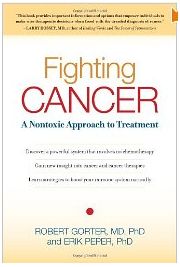
On April 25th, Dr. Erik Peper will be presenting a webinar on biofeedback and cancer based on his latest book; Fighting Cancer-A Non Toxic Approach to Treatment which was co-authored with Robert Gorter, M.D., Ph.D. The book describes a new paradigm of understanding and treating cancer by focusing on mobilizing and activating the immune system.

One in two people will get cancer, one in three will die of it—What can you do? The webinar explores the need for a new prevention and treatment paradigm. It overviews cancer risk factors, strategies to mobilize the immune system through self-care, and the Gorter protocol.

If you, your patients, or any of those you love are dealing with cancer, this is an excellent opportunity for discovery, and to enjoy Dr. Peper’s always spellbinding presentation. 

Cancer Prevention, Treatment, Choices and Hope
Presenter: Dr. Erik Peper
Date: April 25, 2012
Time: 12:00-1:00 PM Eastern Time (US & Canada)
Click here for more information.

Erik Peper, Ph.D. is an international authority on biofeedback and self-regulation. He is Professor at the Institute for Holistic Healing Studies / Department of Health Education at San Francisco State University. He is President of the BFE and past President of the Association for Applied Psychophysiology and Biofeedback. Dr. Peper’s best-selling book “Muscle Biofeedback at the Computer,” is a practical manual used by San Francisco State University as part of its program for which Dr. Peper received the 2004 California Governor’s Safety Award. For more information on maintaining energy and health at work and a series of healthy computing tips, visit Dr. Peper’s blog The Peper Perspective.

'

9 December 2011

Beating Holiday Stress With Biofeedback

Every year at this time the media features articles about holidays and stress.  This can indeed be a hectic time of year, but it doesn’t have to be stress filled. The Mayo Clinic’s website offers a list of coping strategies, including one that focuses on breathing:

“Take a breather. Make some time for yourself. Spending just 15 minutes alone, without distractions, may refresh you enough to handle everything you need to do. Take a walk at night and stargaze. Listen to soothing music. Find something that reduces stress by clearing your mind, slowing your breathing and restoring inner calm.”  Click here for full article.

As we approach the holidays, I thought it would be a good time to remind all the followers of this blog about the BFE’s EZ-AIR PLUS software program.  EZ-AIR PLUS is a software program published by the BFE to help you breathe better when sitting at your computer. It allows you to place a thin bargraph or linegraph anywhere on your computer screen to help you pace your inhalation and exhalation. You can let it run continuously on screen (with or without sound) or you can schedule "breaks" throughout your day to regulate breathing. 


As health professionals, you know the importance of proper breathing and the benefits it can provide to your clients. EZ-AIR PLUS is an ideal way for your clients to practice relaxation techniques at home. We offer a free 30-day trial on our website at www.bfe.org. After the 30-day period, the software can be purchased for $19.95 USD. Proceeds from the sale of EZ-AIR PLUS help to support the work of our foundation. Click Here to view EZ-Air Plus Promo.

The Physiology of Breathing
Breathing is a natural process which occurs without conscious control. Babies and young children breathe effortlessly. Most of the movement associated with their breathing occurs primarily in the lower abdominal area. As they exhale, their abdomen (stomach) goes in slightly. When they inhale, they abdomen expand outward and to the sides. Most adults, however, no longer breathe in this healthy pattern. Instead, they hold their stomach rigid or slack and use a significant amount of upper body muscular activity to inhale.

The major muscle involved in proper breathing is called the diaphragm. This is a dome shaped muscle located beneath the ribs and above the stomach. In order to inhale, the diaphragm tightens and flattens. This activity displaces the liquid contents of the abdomen and thereby creates a larger space in the chest. As this space is created, the pressure in the atmosphere exceeds the pressure in the chest and air flows in to balance these pressures out.

To exhale, the diaphragm must relax and be raised upward, compressing the air in the chest and allowing the air to be expired. Thus, inhalation requires that the abdominal area relax and expand, while exhalation requires the abdominal area to decrease in diameter. The chest and shoulders should stay relaxed throughout the breathing cycle.

From the manual “Breathing for Health With Biofeedback”  by Dr. Erik Peper

 EZ-AIR PLUS. It is a great way to relax, reduce stress and a reminder to do something good for ourselves during this busy time of year!

Related Posts Plugin for WordPress, Blogger...