18 January 2012

BFE 2011 Annual Conference

We have just confirmed the dates for our 2012 Annual Conference. This year the conference will be held September 11-15, 2012 in Rzeszów, Poland.

For more information, as well as submissions of workshop proposals, submissions for the scientific program (symposia, lectures, papers, posters, short courses) and questions about industrial exhibition please contact:
Monika Fuhs, Program Chair: editor@bfe.org,
or visit our homepage www.bfe.org

Submission deadlines:
March 1, 2012 workshops and short courses, invited talks
April 15, 2012 symposia and paper session
May 1, 2012 posters and oral presentations

We look forward to seeing you there!

9 December 2011

Beating Holiday Stress With Biofeedback

Every year at this time the media features articles about holidays and stress.  This can indeed be a hectic time of year, but it doesn’t have to be stress filled. The Mayo Clinic’s website offers a list of coping strategies, including one that focuses on breathing:

“Take a breather. Make some time for yourself. Spending just 15 minutes alone, without distractions, may refresh you enough to handle everything you need to do. Take a walk at night and stargaze. Listen to soothing music. Find something that reduces stress by clearing your mind, slowing your breathing and restoring inner calm.”  Click here for full article.

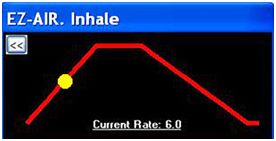
As we approach the holidays, I thought it would be a good time to remind all the followers of this blog about the BFE’s EZ-AIR PLUS software program.  EZ-AIR PLUS is a software program published by the BFE to help you breathe better when sitting at your computer. It allows you to place a thin bargraph or linegraph anywhere on your computer screen to help you pace your inhalation and exhalation. You can let it run continuously on screen (with or without sound) or you can schedule "breaks" throughout your day to regulate breathing. 


As health professionals, you know the importance of proper breathing and the benefits it can provide to your clients. EZ-AIR PLUS is an ideal way for your clients to practice relaxation techniques at home. We offer a free 30-day trial on our website at www.bfe.org. After the 30-day period, the software can be purchased for $19.95 USD. Proceeds from the sale of EZ-AIR PLUS help to support the work of our foundation. Click Here to view EZ-Air Plus Promo.

The Physiology of Breathing
Breathing is a natural process which occurs without conscious control. Babies and young children breathe effortlessly. Most of the movement associated with their breathing occurs primarily in the lower abdominal area. As they exhale, their abdomen (stomach) goes in slightly. When they inhale, they abdomen expand outward and to the sides. Most adults, however, no longer breathe in this healthy pattern. Instead, they hold their stomach rigid or slack and use a significant amount of upper body muscular activity to inhale.

The major muscle involved in proper breathing is called the diaphragm. This is a dome shaped muscle located beneath the ribs and above the stomach. In order to inhale, the diaphragm tightens and flattens. This activity displaces the liquid contents of the abdomen and thereby creates a larger space in the chest. As this space is created, the pressure in the atmosphere exceeds the pressure in the chest and air flows in to balance these pressures out.

To exhale, the diaphragm must relax and be raised upward, compressing the air in the chest and allowing the air to be expired. Thus, inhalation requires that the abdominal area relax and expand, while exhalation requires the abdominal area to decrease in diameter. The chest and shoulders should stay relaxed throughout the breathing cycle.

From the manual “Breathing for Health With Biofeedback”  by Dr. Erik Peper

 EZ-AIR PLUS. It is a great way to relax, reduce stress and a reminder to do something good for ourselves during this busy time of year!

11 October 2011

Thank You for Visiting Us at ISNR!

Thank you to everyone who stopped by to visit us at ISNR.We hope you learned a little bit about us and the online educational opportunities at the Biofeedback Foundation of Europe. We look forward to see you online soon!

Here is part 3 of our recent interview with Francois Dupont in which he talks about his current work on several BFE teams and what is coming in the future.

You have also collaborated on the creation of the BFE TBI Suite which is currently being developed.
One philosophy of the BFE is to bring different people together to work on common project. The TBI (Traumatic Brain Injury) suite is one of these projects. Drs. John Davis and Robert McCarthy and I have met a number of times to start organizing information about instruments to assess TBI, resources for people who have suffered TBI and the type of EEG assessment needed for this condition. Traumatic brain injury is different from conditions like attention deficit disorder in the sense that with ADHD there are some typical configurations or presentations in terms of brainwave activity. Since traumatic brain injury is the result of an injury that can affect any part of the brain – there is nothing typical about it. For example, sometimes we see the brain of a person who was hit on the left side to be mostly affected on the right side because of what we call the contra-coup. The brain essentially moved from one side of the skull to the other side during the accident. For this reason, we need to do a more extensive assessment and in most cases we would recommend to do a full QEEG with 19 channels. We are exploring what would be the best type of training screens to adjust easily to this unfortunate condition.

I know there are suites for ADHD and Attention in the works. Can you tell me a bit about those?
I am also currently working with Dr. Vincent Monastra and Dr. Joel Lubar on two suites for ADHD and Attention. These men were very happy to learn that for some years I have been using a scripted session that replicates the steps needed for their assessment of ADHD. As a team, we improved this software greatly. For instance, there is now an Excel report automatically created at the end of the assessment with graphs using the published norms of their famous Theta/Beta power ratio. This suite is the perfect example of the usefulness of the scripted session. The reason for this is that their ratio has been regularly misused in the field. For example, many people record the theta/beta ratio with eyes closed, which was never part of the actual protocol by Monastra, Lubar and their collaborators. This script function allows us to reproduce the exact conditions set by these pioneers in their published research. A person using the script will essentially reproduce exactly what Dr. Monastra and Lubar have done to create the norms for the theta/beta ratio. There is standardized text to be read by the client and the audio recording for the listening task is played automatically in the assessment script. Both are based on age group. The BFE plans to create versions in many languages.

What specific challenges do these topics provide?
Dr. Monastra and I are working on different ways to present feedback for children who have attention problems. We are exploring new functions such as flash games that are appealing to a younger audience. With Dr. Monastra’s expertise in the field of attention, we hope to find ways to make the training faster and more efficient.

Dr. François Dupont is a registered psychologist with competence in general, health, and rehabilitation psychology. In his private practice in Ottawa, he often combines bio/neurofeedback with techniques borrowed from cognitive-behavioural, dynamic-humanistic and experiential approaches. Involved with the BFE for more than a decade, he has developed software suites such as: Infiniti for The Learning Curve (TLC), Integrated Neurofeedback, and Monastra-Lubar Theta/Beta Assessment. His expertise as a clinician combined with his software knowledge make Francois an ideal contributor to BFE Software Suites.

Special thanks to Dr. Dupont for granting us the time for this interview and for all the work he has done in collaboration with several BFE-IREP teams.

JOIN OUR MAILING LIST!
To stay up-to-date on new products available in our online shop, including software, classes, webinars and workshops feel free to join our mailing list. Click here to sign up.
 

7 September 2011

Gearing Up for ISNR - Integrated Neurofeedback with Francois Dupont

Several representatives from the BFE will be on hand at the upcoming ISNR Conference - September 14-18, 2011 in Phoenix, AZ. Among them will be Francois Dupont, Ph.D.


At the Thought Technology Ltd.
Silver Sponsor Booths 11 & 20


Dr. François Dupont is a registered psychologist with competence in general, health, and rehabilitation psychology. In his private practice in Ottawa, he often combines bio/neurofeedback with techniques borrowed from cognitive-behavioural, dynamic-humanistic and experiential approaches. Involved with the BFE for more than a decade, he has developed software suites such as: Infiniti for The Learning Curve (TLC), Integrated Neurofeedback, and Monastra-Lubar Theta/Beta Assessment. His expertise as a clinician combined with his software knowledge make Francois an ideal contributor to BFE Software Suites.

I recently had a chance to speak to Francois about a number of neurofeedback software suites he has created. This post about Integrated Neurofeedback is the second in a 3-part series.

You have also created the Integrated Neurofeedback suite. It differs from other BFE suites in that it is not just about one specific topic. How can the Integrated Neurofeedback suite help both the beginner and the experienced neurofeedback practitioner?
While beginners will benefit right away from the simplicity of this suite, experienced clinicians will learn to appreciate the many levels of integration within the suite itself and the integration with other suites from the BFE and from Thought Technology. Let’s explore the simplicity first. Even though there are many screens in the suite, the majority of the screens use the same template consisting of one main bargraph and 2 or 3 smaller bargraphs as watchdogs for artefacts and muscle activity. 

I’ve heard you refer to this as the “One Main Bargraph” approach.
Yes. The main bargraph represents the result of a computation or an algorithm that can be very simple, like one frequency band inhibit from one physical channel. It can also be very complex, like combining 6 bands from 2 physical channels. For example, this could be 2 inhibit bands and 1 reward band per channel. The result of the computation, as sophisticated as it may be, is presented by that one main bargraph. This makes it very easy for the therapist and for the person who’s training to know what is supposed to happen; in most cases the goal is to lower the main bargraph. 

This “one main bargraph” approach also allowed for the creation of very useful and easy to read trend instruments that are integrated into the training screen. The therapist and the clients themselves can use these instruments to gauge progress in real time during the training session. Essentially, if the slope in the trend instrument is going down, you’re doing a good job because it means you’re progressing toward the state defined by the algorithm.

How are the training bands determined?
The Integrated Neurofeedback suite uses the specific training bands defined by an assessment done with a full QEEG, the TLC suite, any type of Mini Q assessments well as a symptom based assessment such as the Brownback-Mason CNC-1020. The suite uses these bands to automatically create a number of training screens that are customized to the client’s needs. Let’s say that the results from an assessment indicate that a client should decrease amplitude of lower frequencies (3 to 9 Hz) at C3 and C4 locations and also decrease amplitude of higher frequencies (21 to 35 Hz) at the same locations. And, it also indicates that an increase in amplitude of frequency bands 15 to 19 Hz at C3 and 12 to 14 Hz at C4 would be beneficial. You simply enter these band parameters in what is called the “Basic Planning Screen” to automatically generate a number of training screens with the specific bands for this client.

Here are only a few examples of the screens hierarchy created in the suite. In these examples, when I talk of focus, I mean the computation or algorithm attached to the main bargraph in the training screen. 
  •  Screen that focuses on increasing 15 to 19 Hz at C3
  • Another screen that does the same for 12 to 14 Hz at C4
  • Screen that focuses on decreasing low and high frequencies combined at C3
  • Another screen that does the same at C4 
  • Screen that focuses on decreasing low and high frequencies and increasing 15 to 19 Hz at C3
  • Another screen that does the same for 12 to 14 Hz at C4 
  • Finally, a screen that combines decreasing low and high frequencies and increasing the specific rewards at C3 and C4 all at the same time
Each one of these algorithms is computed in the background and the result is attached to the main bargraph. Training screens with ratios made of low frequencies over reward bands and high frequencies over reward bands are automatically created. Training for the percentage of the total power of a user defined band is also included. Training with Joint Time-Frequency Analysis (JTFA) is possible, as well as coherence training, Alpha-Theta training, reversal correction training, etc.

Can you give an example of a typical session?
Integrated Neurofeedback Training Screen
This “one main bargraph” approach opened the door to a sophisticated integration of amplitude training and time in the target zone training, presented in meaningful audio and video format to create a multi-dimensional feedback system. In each screen the same computation is associated with the main bargraph and with a line graph. However, the resulting value is presented with different smoothing, which means that these two instruments move at different speeds.

  • First, there is a musical key being played over a set number of octaves which is controlled by the line graph. The movement of the musical notes is threshold independent, there is no threshold, and is proportional to how far the line goes toward the condition to be reinforced. It is the foundation for training with eyes closed since this is a continuous and proportional audio feedback. This first level of feedback gives the following message: “You’re going in the good direction”. 
  • As soon as you cross the threshold on the bar graph, without inhibit or artefact, you get a very soft sound and the bar turns grey. The message here is: “You are able to reach the desired state”.
  • Then, when you hold the bar in condition, without inhibit or artefact, for one unit of time on a counter, the animation moves and you have a soft pink noise, which remains present for as long as the bar is in condition. By adding the animation and a third layer of enveloping sounds, this level adds the following message: “You are able to sustain the desired state”.
  • Finally, when you are able to hold the bar in condition, without inhibit or artefact, for a longer period of time, the default being 4 units of time, you have a discrete sound from a bell, as well as a green light and one point on the cumulative counter. Here the final message is: “You are able to sustain the desired state long enough to accumulate points”. 

The enveloping effect of this multi-layered feedback system has to be witnessed to be fully appreciated.

What types of review screens are available?
Protocol Selector Review Screen
Another feature that experienced clinicians really appreciate is the Protocol Selector series of review screens. This is a type of review screen that is used right after a recording. What is different about this review screen is that it will plot the value of the actual computation used for training and associated to the main bargraph. For example, it will plot the sum value of “the low and high inhibits at C3 and C4” to quickly and easily show if the trainee is making progress with the actual computation. But what is really innovative is the fact that the other computations available in the suite are also on the review screen even if they were not used for the training session just completed.  This allows verifying visually if another computation might be giving more efficient feedback than the one used during the recording. In our example, if a ratio made of the inhibit bands over the reward bands has a more pronounced slope than the algorithm using the sum of the inhibit bands alone, and used during the training being reviewed, it would be wise to test this protocol during the next training section.

Finally, these Protocol Selectors and the other types of review screens, as well as the screens for statistics in the Integrated Neurofeedback suite can be used with data from most of the other suites from the BFE and Thought Technology. This is possible because special channel sets have been created specifically for that purpose. Once you have learned to appreciate the Protocol Selectors, you will be curious to see the data from other suites analyzed through them.

Coming Soon...
Part 3 - Suites Under Development

We hope you will stop by to meet Francois Dupont and learn more about the neurofeedback education offered in our Learn From the Best program. Not attending ISNR but want to learn more? We offer software, interactive online learning and home study programs. 

INTEGRATED NEUROFEEDBACK SOFTWARE SUITE
The Integrated Neurofeedback software suite is available for direct download in the BFE Online Shop.

INTEGRATED NEUROFEEDBACK ONLINE CLASS
Learning to use a new software program can be both time consuming and challenging. Join us in an online class to learn the basics and beyond in a friendly, interactive environment.

1 September 2011

Gearing Up for ISNR - Francois Dupont and Infiniti for The Learning Curve

Several representatives from the BFE will be on hand at the upcoming ISNR Conference - September 14-18, 2011 in Phoenix, AZ. Among them will be Francois Dupont, Ph.D.

At the Thought Technology Ltd.
Silver Sponsor Booths 11 & 20

Dr. François Dupont is a registered psychologist with competence in general, health, and rehabilitation psychology. In his private practice in Ottawa, he often combines bio/neurofeedback with techniques borrowed from cognitive-behavioural, dynamic-humanistic and experiential approaches. Involved with the BFE for more than a decade, he has developed software suites such as: Infiniti for The Learning Curve (TLC), Integrated Neurofeedback, and Monastra-Lubar Theta/Beta Assessment. His expertise as a clinician combined with his software knowledge make Francois an ideal contributor to BFE Software Suites.

I recently had a chance to speak to Francois about a number of neurofeedback software suites he has created. This post about Infiniti for The Learning Curve is the first in a 3-part series.

Sample screen from Infiniti for The Learning Curve

The first suite you created with the BFE is called Infiniti for The Learning Curve. It allows the Infiniti user to interface with Peter Van Deusen's TLC database. How did this come about? 
Peter Van Deusen’s TLC  assessment can be used with different hardware and software platforms, but for some time there was no link with the BioGraph Infiniti system. Since that is the equipment I’ve been using for a number of years, I offered to create the interface and that is how I came to create my first suite for the Biofeedback Foundation of Europe.

How is this suite beneficial to Infiniti users?
The Infiniti for The Learning Curve suite is especially beneficial to Biograph Infiniti users who want, for diverse reasons, to use an advanced EEG assessment without going for a formal 19 channel QEEG. The TLC approach uses regular encoders like ProComp Infiniti, ProComp2, Procomp 5, and even the older ProComp Plus to record a structured and thorough assessment of brain wave activity. This can be done with two channels, 4 channels or 6 channels of EEG, with or without physiology measures, depending on the encoder.

How does this assessment work?
One advantage that Biograph Infiniti has over other software is the ability to use a scripted session in which all the steps in the assessment are already programmed. The user simply reads the instructions on the screen and clicks a button to advance through the steps. You begin by recording with eyes closed, then with eyes open and then with a specific task such as reading. This sequence of steps is repeated the number of times necessary to end up with 18 sites of recording. For each sequence, the sensors are placed in different locations on the head and the task is different. Because it is a script, it’s as if someone is taking you by the hand and guiding you through the process. 

How is the data interpreted?
When you’re finished with the recordings, you can easily transfer the data into a very sophisticated Excel workbook, which is the core of Peter Van Deusen’s approach. In this file system you find different ways of presenting and analysing the EEG data recorded during the assessment. There are many maps, tables, graphs, and guidelines to help you make sense of the data. Everything is structured to help you decide where to put the sensors for training and which frequency bands you should train first.

Are there other benefits to using the TLC approach?
One obvious benefit of this approach is the price. A full QEEG system (hardware and software) is very expensive. With the TLC approach, you use the same encoder to do the assessment that you use to provide neurofeedback training. Many professionals serious about working in this field refer to the TLC assessment as being the next best thing to a full QEEG.

Coming Soon...
Part 2 - Francois Dupont and Integrated Neurofeedback
Part 3 - Suites Under Development

We hope you will stop by to meet Francois Dupont and learn more about the neurofeedback education offered in our Learn From the Best program. Not attending ISNR but want to learn more? We offer software, interactive online learning and home study programs. 

INFINITI FOR THE LEARNING CURVE SOFTWARE SUITE
Dr. Dupont's Infiniti for the Learning Curve software suite is available for direct download from the BFE Online Shop.

INFINITI FOR TLC ASSESSMENT ONLINE CLASS
Learn how to use the Infiniti for the Learning Curve software in a live interactive format.

TLC ASSESSMENT GRAND ROUNDS
If you are interested in learning more about the TLC approach, we are pleased to offer a series of online grand rounds sessions hosted by Peter Van Deusen. During the last series, Dr. Dupont was also on hand to offer his insights and to answer any technical questions that arose. ...


The Biofeedback Foundation of Europe provides education for experienced clinicians and researchers as well as for those just entering the field. 
Visit the BFE Online Shop to learn more. 


18 August 2011

Gearing Up for ISNR: Linda Walker and Troubled Youth

Several representatives from the BFE will be on hand at the upcoming ISNR Conference - September 14-18, 2011 in Phoenix, AZ. Among them will be Linda Walker, MHR, LPC, BCIA-EEG.

At the Thought Technology Ltd.
Silver Sponsor Booths 11 & 20


Linda Walker holds a master’s degree in Human Relations and Counseling from the University of Oklahoma and post graduate certificates in substance abuse and school counseling from Western Michigan University. She is licensed as a professional counselor and a school counselor in Michigan. In addition, she specializes in EMDR and substance use issues. Linda is certified in EEG biofeedback from the Biofeedback Certification International Alliance. She is currently in private practice in Michigan.

Nokomis Challenge Center
For over 12 years, Linda has worked with troubled youth and their families, most notably at Nokomis Challenge Center, a state training school for juvenile offenders in Michigan. At Nokomis, Linda was dedicated to developing and implementing the agency’s neurofeedback program. She served as an instructor and treatment group leader in the experiential wilderness therapy program. I recently spoke to Linda about her approach in working with this this population group. Here are some excerpts from that conversation:

When you say troubled youth, who exactly are you identifying as troubled youth?
Troubled youth are those adolescents and pre-adolescents who have either come to the attention of police or courts because of their behavior or delinquent acts within the community, or because of instability within the home. Those youth who have not dropped out of school or been expelled frequently have difficulty within the educational setting and are often functioning in special classrooms or settings. To make matters worse, their lives are often marked with trauma from abuse, loss or family chaos. Poverty and lack of family presence is common.

How do you assess these youth and direct treatment for them using new technologies?
It’s clear that adolescent problems and needs vary across a wide spectrum. Assessment of a teenager needs to pinpoint areas of need and identify strengths to determine appropriate candidates for neurofeedback and biofeedback, and guide the therapist in appropriate treatment modalities. Further, proper assessment and parsimonious treatment plans supported by evidence-based methods are critical to success in treating adolescents not only because of their educational and psychiatric challenges, but also because of their ever-changing emotional and physical growth.

Through the use of Quantitative Electroencephalogram (QEEG), we are able to recognize and assess patterns of brain activity that appear to typify common disorders, such as ADHD, depression, learning disabilities and anxiety. For those youth who need medications we provide referenced QEEG (rEEG) to assist our psychiatrist in pinpointing which drugs would benefit are clients most effectively within treatment.

We can also use more traditional testing instruments such as Test Of Variables of Attention (TOVA) to help identify issues of attention or the Millon Adolescent Clinical Inventory (MACI) to clarify psychiatric or behavioral issues. Observations from treatment team members and in-depth client interviews round out the assessment process. These methods and instruments help clarify what we observe in the QEEG.

What are the treatment and training goals for this population?
Based upon the assessment, appropriate treatment protocols are then directed for the individual youth. Both the youth and treatment team are involved in this process. For example, a youth's goals could be to reduce the following: controlling anger, depression or anxiety; being more focused; or performing mentally and physically at a peak level. The treatment team parental goals might include better recognition of boundaries (not getting into everything), less impulsivity, reducing off-focus, off-task behavior, developing social skills, improving empathy for others, better understanding of the effect of behavior on others or addressing substance abuse issues. Parental or familial goals might include helping the youth return home, having fewer contacts with the police or courts, staying in school and following house rules.

Clearly neurofeedback alone will not accomplish all of these goals. No one therapy can. But neurofeedback can play a key role in resolving underlying mood and cognitive functioning issues that exacerbate the behavioral problems of troubled youth. The training goals are tailored for each individual client. The areas of concern that the client describes and the assessment of the QEEG give us the direction of what areas of the brain to concentrate training on. The duration of the sessions can be tailored and monitored for success for each individual client. By using coaching and motivational techniques, we strive to create an environment that encourages success and progress. We use biofeedback, neurofeedback, and z-score training to accomplishing these goals.

We hope you will stop by to meet Linda Walker and learn more about the neurofeedback education offered in our Learn From the Best program. Not attending ISNR but want to learn more? We offer software, interactive online learning and home study programs. 

TROUBLED YOUTH ONLINE CLASS RECORDINGS
Linda has just wrapped up recording of her Troubled Youth online class. The session recordings are available in the BFE Online Shop.

TROUBLED YOUTH SOFTWARE SUITE
Also available from the BFE is the Troubled Youth software suite that includes display screens based on Linda's work. This suite is compatible with the Biograph Infiniti software and is available as a download from our online shop.
...

4 August 2011

Biofeedback Offers Help to Survivors of Japan's Earthquake and Tsunami


Most of you are already well acquainted with the work of Dr. Erik Peper, renowned psychologist, educator, author and president of the Biofeedback Foundation of Europe. What you may not know is that he travels extensively teaching workshops in biofeedback around the world. Recently, he traveled to Japan to teach strategies to reduce stress and prevent PTSD with the help of biofeedback.

Disaster Strikes
On March 11, 2011, the world witnessed one of the most devastating natural disasters of our time: Japan’s earthquake, followed by a tsunami and then a nuclear disaster.  We watched the events unfold and were shocked by the magnitude of suffering and loss.  Then, we moved on with our lives. But for the people of Sendai, the healing process is only beginning and will last for years. Even after their physical needs are met the psychological scars remain.


In the Aftermath of the Earthquake and Tsunami
In response to the disaster, Dr. Erik Peper volunteered his time and traveled to Japan to offer a series of workshops on using biofeedback to treat stress and PTSD. Before he left, he secured a donation of 50 GSR2’s as these hand held, battery operated biofeedback devices would be ideal for bringing treatment to those affected.  It is used as an educational tool to demonstrate and experience that emotions, thoughts, images and body are all interconnected. It helps the participants lower and experience control over their ongoing sympathetic arousal. During his stay, he shared his expertise with psychologists, physicians, health professionals and volunteers.  The training programs were organized by:

  • Naoki Takebayashi, M.D, Head, Institute of Holistic and Integrative Medicine, Osaka, Japan
  • Morihiro Tsujishita, Professor, Konan Women University, Kobe, Japan
  • Tomo Nakagawa, Administrative Officer, Institute of Holistic and Integrative Medicine, Osaka, Japan


April 28, 2011 – Full Day Basic Course
Basic Medicine, Psychophysiology, Practical Training with Biofeedback Tools to Prevent and Reduce Stress and PTSD Associated with Tsunami Trauma
Konan Women University (for general volunteers)

April 28, 2011 – Evening Lecture
Behavioral, Cognitive Education to Prevent and Reduce Stress and PTSD Associated with Tsunami Trauma
Kansai Medical University (for physicians and other health professionals planning to work with people who experienced trauma)

April 29, 2011 – Full Day Advanced Seminar
Psychophysiology and Practical Training with Biofeedback Tools to Prevent and Reduce Stress and PTSD
Kansai Medical University (for health professionals and psychologists)

April 30, 2011 – Full Day Advanced Seminar
Training for Practitioners Headed to Iwata Prefecture
Konan Women University
Sponsored by:  Konan Women University and the Institute of Holistic and Integrative Medicine   


by permission from Naoki Takebayashi, MD

Training First Responders
When asked what it was like to be in Japan at this time, Dr. Peper replied, "Although it was and continues to be a major catastrophe, all the people I met wanted to contribute and help. They were appreciative that I came to teach, since so many foreigners left in panic and have cancelled their travel to Japan. The health care professionals are remarkable in volunteering to help in areas where the disaster occurred. The donation of equipment was very appreciated as it truly was a symbol that other people cared. I felt so fortunate to be able to share some of the self-regulation skills to support regeneration and inhibit vigilance. As I flew back to the USA on April 30th, some of the students in the training program went to Iwate prefecture in the disaster area to teach and apply these self-regualtion skills."

Following Up on the Progress
Dr. Peper returned to Japan in July to teach a two day workshop in Iwate prefecture along with three more programs around Sendai. We look forward to hearing more from Dr. Peper and the health professionals he trained in Japan about the role of biofeedback in reducing the impact of the Tsunami. Meanwhile, our thoughts are with the people of Japan.

More About Dr. Erik Peper...
To learn more about Dr. Peper's methods consult his book Biofeedback Mastery: An Experiential Teaching and Self-Training Manual (co-authored with Hana Tylova, Katherine H. Gibney, Richard Harvey and Didier Combatalade and available through the AAPB or on amazon.com). Dr. Peper's software suite, Biofeedback Basics is a companion to his book and is available in the BFE online shop.

Photos courtesy of Dr. Erik Peper
Related Posts Plugin for WordPress, Blogger...