4 September 2012

New ADHD Software Suite and Online Grand Rounds Sessions with Dr. Vincent Monastra


Compatible with the Thought Technology BioGraph Infiniti system, the ADHD Assessment Suite takes the design and findings of Dr. Vincent Monastra & Dr. Joel Lubar's 1999 study (Assessing Attention Deficit Hyperactivity Disorder via Quantitative Electroencephalography: An Initial Validation Study) and turns it into an automated ADHD Assessment protocol. The design team includes Dr. Francois Dupont (creator of the Integrated Neurofeedback suite and others) and the BFE's own Jon Bale who worked closely with Drs. Monastra and Lubar.

Dr. Vincent Monastra 
Dr. Vincent Monastra
Vincent J. Monastra, Ph.D. is a clinical psychologist and director of the FPI Attention Disorders Clinic in Endicott, New York. He is also an adjunct associate professor in the Department of Psychology at Binghampton University. During the past three decades, he has conducted a series of studies involving more than 10,000 individuals with disorders of attention and behavioral control, resulting in the publication of numerous scientific articles, a book chapter, and the award-winning book,Parenting Children with ADHD: 10 Lessons that Medicine Cannot Teach (APA, 2005). His skills as a master diagnostician and therapist have been widely recognized and are archived in several educational videotaped programs, including Working with Children with ADHD (APA, 2005). His model for diagnosing and treating ADHD has been published in the book, Unlocking the Potential of Patients with ADHD: A Model for Clinical Practice (APA, 2007).

Dr. Joel Lubar
Dr. Joel Lubar received his B.S. and Ph.D. from the Division of the Biological Sciences and Department of Biopsychology at the University of Chicago. He has published more than 125 papers, numerous book chapters, as well as eight books in the areas of Neuroscience and Applied Psychophysiology. He has been a Regional Editor for the Journal Physiology and Behavior, an Associate Editor for Biofeedback and Self Regulation, and is currently one of the editors of the Journal of Neurotherapy.

He has held the position of Assistant Professor at the University of Rochester. In 1967 he became an Associate Professor and then a Full Professor at the University of Tennessee in 1971.
Dr. Joel Lubar

Dr. Lubar was the past president of AABP(Association for Applied Psychophysiology and Biofeedback) and was the president of ISNR(International Society for Neurofeedback and Research. He has been the president of the Academy of Certified Neurotherapist which now offers specialty certifications in EEG Biofeedback under the Biofeedback Certification International Alliance (BCIA). He has also been the president of the EEG Division of the AAPB. He has served on the BCIA Board of Directors, and as a member of the executive board of the AAPB. He was previously an officer on the board of the Biofeedback Research Society. He was the first President of the Biofeedback Society of Tennessee. Since 1979 he has been co-director of the Southeastern Biofeedback l Institute, in Knoxville and now in Pompano Beach, Florida. Dr. Lubar has presented his research at many workshops in Europe, South America, Canada, Israel, Australia and to many State and National meetings of Biofeedback Organizations. He was an invited keynote speaker at the Third International Conference in Biobehavioral Self Regulation and Health, held in Tokyo, Japan, October, 1993.

Dr. Lubar was responsible for developing the use of EEG Biofeedback (Neurofeedback) as a treatment modality for children, adolescents, and adults with Attention Deficit Hyperactivity Disorder, starting with his controlled studies in mid-1970. This application of Neurofeedback is now becoming widespread in clinics and schools throughout the United States, Canada, Australia, Israel, Europe and Mexico. Currently, more than 1500 health care organizations are using the EEG biofeedback protocols that Dr. Lubar has developed. Dr. Lubar is currently developing neurofeedback for LORETA (Low Resolution Electromagnetic Tomography), and is a consulting for several controlled studies evaluating the effectiveness of Neurofeedback. In a 1992 publication, in Pediatric Neurology, he and his colleagues showed, for the first time, that children with the inattentive form of ADD (without hyperactivity), differ significantly in terms of quantitative EEG patterns, from matched control non-ADD children. He also has conducted and published research on the use of Neurofeedback for seizure disorders.

Dr. Francois Dupont
Dr. François Dupont
Dr. François Dupont is a registered psychologist with competence in general, health, and rehabilitation psychology. In his private practice in Ottawa, Canada, he often combines bio/neurofeedback with techniques borrowed from cognitive-behavioural, dynamic-humanistic and experiential approaches. Involved with the BFE for more than a decade, he has lectured in Canada and overseas. He recently presented at the BFE’s 16th Annual Conference in Poland.


ADHD Assessment Suite
The ADHD Assessment suite main monitoring screen is used for recording and/or monitoring data and verifying if too much artifact is being generated:


An excel report takes the results of the assessment and compares them to established age-related norms, for the diagnosis of ADHD in the individual:


All material necessary for the assessment (age appropriate reading, listening and cognitive tasks) is included within the suite documents:
Sample of images used with the drawing task in the assessment.


Online Grand Rounds with Dr. Monastra
In these monthly Grand Rounds sessions hosted by Dr. Vincent Monastra, participants will have the opportunity to present case studies for review and to benefit from Dr. Monastra's experience and knowledge in the field. The session also provides APA CE credits granted on a one credit per contact hour basis.

Both the grand rounds and the ADHD Software suite can be purchased in the BFE Online Shop.
ADHD Assessment Suite
ADHD Grand Rounds


For additional information, feel free to contact the BFE ADHD Team at blueadhd@gmail.com.

.

17 August 2012

Have you registered for the BFE Annual Meeting?


The BFE conference is just around the corner. We are working on the final details for the workshops, the scientific day and the gala dinner and have a few surprises planned as well!

Thank you to everyone who has already registered. This is the first time we will be hosting a conference in Poland and we are looking forward to welcoming all the participants from the region and also those of you coming from afar! A special thanks to Dr. Rafal Sztembis for all the work he is doing in Poland to make the meeting a success.

There are still spaces in all the workshops, though many are filling up quickly so we urge you to reserve your spot if you are planning to attend. This year's lineup includes:

Drs. Lynda and Michael Thompson
Introduction to the Practice of Neurofeedback: Assessment leads to Appropriate Intervention 

Heart - Brain Connections: Neuroanatomy Underlies the Effectiveness of Interventions that Combine Neurofeedback with Biofeedback 

Neuroanatomical Underpinnings for Optimal Performance Interventions: Foundations for Designing a Clinical Practice that Combines Neurofeedback with Biofeedback to Optimize Important Aspects of Mental and Psychophysiological Functioning in Order to Set-Up-for-Success

Dr. Marek Jantos 
Introduction to the Glazer SEMG Intrapelvic Assessment Protocol for OB-GYN

New Perspectives on Female Sexual Pain

Dr. Erik Peper 
Stress Management with Biofeedback

Breathing, Biofeedback and Related Mind-Body Interventions to Reduce Chronic Pain and Anxiety

Dr. Donald Moss
Heart Rate Variability Biofeedback: What is Heart Rate Variability? What is its Medical and Psychological Significance? How Can We Optimally Train Positive HRV Changes?

Dr. Francois Dupont
After an EEG Assessment: Integrated Neurofeedback

Dr. Howard Hall
How Therapeutic Language Enhances Pain Management and Biofeedback

Dr. C. Jean Mosley Hall
Preserving & Protecting Indigenous Sign Languages and Deaf Cultures


For full details, visit our website at http://www.bfe.org/meeting.html
Or, download our conference flyer here.


We hope you will join us and this great group of presenters this September in Poland!

15 June 2012

June is PTSD Awareness Month

As you may or may not know, June is PTSD Awareness Month in the US. The full impact of the ongoing wars in Iraq and Afghanistan is not yet known. The US Congressional Office states that, "Through September 2011, about 740,000 veterans from overseas contingency operations in Iraq and Afghanistan had been treated by the Veterans Health Administration (VHA). That number is slightly more than half of all recent veterans eligible for care by VHA."The report goes on to say that, "One in four recent combat veterans treated at VHA from 2004 to 2009 had a diagnosis of PTSD."


National Center for PTSD
A great resource for those suffering from PTSD and their family members is the US Department of Veteran's Affairs National Center for PTSD website. It is full of information about PTSD including a list of symptoms, explanation of various treatments and some basic coping strategies. There is also a Professional Section that provides training materials for health professionals along with information and tools to help with assessment and treatment.Sadly, there is not much about biofeedback/neurofeedback on the site other than brief mentions of biofeedback as an adjunctive treatment or a means to relax.

Click Here to view a video on Dr. Russoniello's methods.
Over the years, the BFE has had the pleasure of working with a host of professionals who are using biofeedback and neurofeedback to treat clients with post traumatic stress disorder. Among them is Dr. Carmen Russoniello, Ph.D., a former Marine machine gunner and decorated Vietnam combat veteran. Dr. Russoniello implemented a biofeedback program for Wounded Warrior Marines at Camp Lejeune. The novel biofeedback intervention involves EEG and heart rate variability feedback and includes the use of virtual reality (VR). He recently presented a 1-hour webinar for the BFE:

The Central Autonomic Network and Combat PTSD: Assessment and Intervention
is now available as a recording in the BFE online shop.

PTSD in the General Public
Dr. Daniel Hamiel is an Israeli psychologist who has done extensive work in treating children with PTSD. In a past issue of Psychophysiology Today, Dr. Hamiel wrote an article titled "There Are the Best Laid Plans, and Then There is Biofeedback". The article summarizes his work with a group of adolescents who survived a terrorist bomb attack in a discotheque in Tel Aviv. Click here to read the full article.

Learning More About Biofeedback/Neurofeedback for PTSD
For health professionals who want to learn more about the potential of using bio/neurofeedback for PTSD, a good place to start is your local or regional biofeedback society. Attending an annual conference is a great way to learn more about the field and the potential applications in your practice.


1 May 2012

BFE 2012 Annual Conference in Poland

We are very excited to be holding our 16th Annual Conference in Poland for the first time. It is scheduled to take place September 11-15, 2012 in Rzeszów, Poland. 

More details on individual workshops will be available in the coming weeks and months and we will share them on the blog and on our website. For now, here's a taste of Polish culture for you to enjoy. Remember, if you have any questions about the conference, send an email to Kayla Lane our Conference Coordinator at conferences@bfe.org.

Hope to see you there!


20 April 2012

Cancer Prevention, Treatment, Choices and Hope

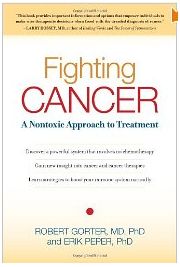
On April 25th, Dr. Erik Peper will be presenting a webinar on biofeedback and cancer based on his latest book; Fighting Cancer-A Non Toxic Approach to Treatment which was co-authored with Robert Gorter, M.D., Ph.D. The book describes a new paradigm of understanding and treating cancer by focusing on mobilizing and activating the immune system.

One in two people will get cancer, one in three will die of it—What can you do? The webinar explores the need for a new prevention and treatment paradigm. It overviews cancer risk factors, strategies to mobilize the immune system through self-care, and the Gorter protocol.

If you, your patients, or any of those you love are dealing with cancer, this is an excellent opportunity for discovery, and to enjoy Dr. Peper’s always spellbinding presentation. 

Cancer Prevention, Treatment, Choices and Hope
Presenter: Dr. Erik Peper
Date: April 25, 2012
Time: 12:00-1:00 PM Eastern Time (US & Canada)
Click here for more information.

Erik Peper, Ph.D. is an international authority on biofeedback and self-regulation. He is Professor at the Institute for Holistic Healing Studies / Department of Health Education at San Francisco State University. He is President of the BFE and past President of the Association for Applied Psychophysiology and Biofeedback. Dr. Peper’s best-selling book “Muscle Biofeedback at the Computer,” is a practical manual used by San Francisco State University as part of its program for which Dr. Peper received the 2004 California Governor’s Safety Award. For more information on maintaining energy and health at work and a series of healthy computing tips, visit Dr. Peper’s blog The Peper Perspective.

'

19 April 2012

BFE-LFB (Learn From the Best) Program and NRBS Conference

Over the past couple months we've been working with Cindy Perlin, president of the Northeast Regional Biofeedback Society, to promote their annual conference that takes place this weekend. The topic of this year's meeting is:

Realizing the Potential of Biofeedback: 
An International Call to Action
April 20-22, 2012

They sum up the purpose of the meeting like this...
"We all know the power of biofeedback and neurofeedback to change people’s lives for the better. It is safe, effective and lower cost over time than virtually any alternatives. Yet it is a relatively unknown treatment, rarely mentioned in the media. This conference will address how to increase biofeedback’s visibility and get treatment to more people, while expanding our individual practices and the field. If you’re passionate about biofeedback and its potential, please join us to make a difference!"

Anyone working in the field knows of the challenges we face as an industry. Part of the BFE's mission as a non-profit community interest company is to promote the field of biofeedback both internationally and regionally. To achieve that objective, we promote the work of our affiliates through social media, press releases, blogs. Our Program Director, Mark Schwartz will be presenting a workshop on "Marketing of Biofeedback on the Internet" and looks forward to seeing you there.

And just as a reminder, the NRBS welcomes members from around the world. Click here for information on joining their society.

Thank you to the NRBS for leading the way on this important topic!

22 February 2012

Biofeedback in Israel

Recently, Dr. Erik Peper traveled to Israel to present a series of workshops on biofeedback. The event was organized by the Israeli Biofeedback-Neurofeedback Association (IBNA). As one of the sponsors of the event, we had the pleasure of working with the members of the IBNA to help promote the workshops. Yuval Oded, a member of the IBNA commented, "Erik is a wonderful human being and an outstanding teacher. As a real master in  integrative approaches to healing, his workshops here not only greatly expanded our knowledge in biofeedback but also affected many of us in our general attitude towards therapy by emphasizing
the role emotional memories and patterns, and interactions of body, mind, social and physical environment for achieving long term results in optimizing performance and health. Erik generously shared his clinical wisdom with us, teaching many practical techniques for increasing self awareness, fostering control and self mastery skills, taking charge and actively participating in ones own healing process. The workshops were not only theoretical. Erik gave us many impressive demonstrations using biofeedback on how to promote health."


Day 1 - Wednesday, January 11th
Making the Invisible Visible with Biofeedback as a Diagnostic and Self Mastery Tool

The workshop focused on integrating biofeedback with cognitive, somatic and imagery techniques. The biofeedback includes analysis of dysponetic muscle patterns, dysfunctional respiratory patterns in clients and training strategies to optimize performance and health. The biofeedback treatment strategies can be used in numerous disorders such as panic and anxiety, recurrent abdominal pain, asthma, muscle dysfunction, hypertension, autonomic disregulation disorders, PTSD and pain.


Day 2 - Thursday, January 12th
Integrated Biofeedback to Manage Stress and to Optimize Health

Dr. Peper discussed the use of respiration biofeedback and other modalities (temp, SEMG, SCL, HRV) for stress management and for reducing pain, panic, anxiety and increasing performance.

Day 3 - Friday, January 13th
From Technostress to Technohealth

This course focused on teaching practitioners how to prevent computer-related disorders and presented a comprehensive approach covering workstation ergonomics, corporate culture work environment, individual work style, work/rest patterns and psychophysiological predisposition. An emphasis is placed on utilizing surface EMG to take the guesswork out of assessment, monitoring, and training.
 
The workshops were co-sponsored and in collaboration with:
SAN Society for Applied Neuroscience (www.applied-neuroscience.org)
Psy-Phi Advanced Psychological Solutions (www.psy-phi.co.il)
Medtechnica (www.medtechnica.co.il)

Comments on the workshop...

“Dr. Pepers' contribution to the field of applied psychophysiology and Biofeedback over the past 40 years is huge. What I have learned from him as a student in many of his BFE workshops, has first of all, changed the way I cope with stress."
--Yuval Oded

"The ability to teach in a way that the participants not only learned new tools for their practice but also for the clinicians themselves, is one of the major strengths of Erik. He made everybody understand and feel hands on that clinicians need to experience Biofeedback themselves in order to be good clinicians."
--Daniela Gräfin von Der Schulenburg-Ortner

The BFE looks forward to working with the IBNA again in the future to promote biofeedback and neurofeedback in Israel.

.
Related Posts Plugin for WordPress, Blogger...