Whether you are new to biofeedback or a seasoned professional, you can benefit from a variety of recorded instruction available in the BFE Online Shop. We have worked with leaders in the field to develop educational content designed to expand your knowledge of bio and neurofeedback.
Why do clinicians come to us, the Biofeedback Federation of Europe (BFE)?
We offer a prolific collection of educational recordings for the practical use of biofeedback and neurofeedback with various clinical populations. Our offerings are competitively priced, and are delivered by direct download for you to permanently own - as opposed to other groups which rent informational recordings for one month or require subscription fees. You can learn at your own pace and re-watch the recordings as often as you like.
What type of individuals can benefit from BFE's offerings?
Any health professional that wants to actively apply biofeedback and/or neurofeedback in their practice, or gain an understanding of the application of such techniques for specific disorders. These professionals can be:
• new to the field, looking for their first experience with biofeedback or neurofeedback technology;
• experienced clinicians that desire to expand their practice to cover additional client population(s) or treatment tools and options;
• professionals looking to fulfill their continuing education requirements.
The Biofeedback Federation of Europe is approved by the American Psychological Association to sponsor continuing education for psychologists. The Biofeedback Federation of Europe maintains responsibility for this program and its content.
Class Recordings
All BFE class recordings consist of 6-hours of instruction, broken down into four 90-minute sessions. Click on the titles below to learn more:
ADHD Monastra-Lubar Assessment Online Class Recording by Dr. Vincent Monastra and Jon Bale
Alpha-Theta Neurofeedback Training Online Class Recording by Linda Walker
Biofeedback Beginners' Online Class Recording by Jon Bale, BFE Research Manager
ClinicalQ & BrainDryvr Online Class Recording by Dr. Paul Swingle and Jon Bale
Dysphagia Class Recording by Dr. Catriona Steele
Emotion & Biofeedback Online Class Recording by Pedro Teixeira and Linda Walker
Heart Rate Variability (HRV) Online Class Recording by Linda Walker
Hemoencephalography (HEG) Online Class Recording by Elizabeth Tegan
Integrated Neurofeedback Online Class Recording by Dr François Dupont
Optimizing Performance & Health Online Class Recording by Jon Bale, BFE Research Manager
ProGolf Suite Online Class Recording by Jane Arave and Jon Bale, BFE Research Manager
Tinnitus and Neurofeedback Online Class Recording by Linda Walker
Troubled Youth Online Class Recording by Linda Walker
Z-Scores Online Class Recording by Linda Walker
Webinar Recordings
Whether you are interested in expanding your horizons to a new application in the biofeedback and neurofeedback field, or whether you are looking to hear a clinical expert's opinion on client cases, these are the sessions that allow you to learn from the best. Here is a sampling of the titles available:
Addicted to Technology: Effects of I-Tech on the Brain by Dr. Mari Swingle
Assessment of ADHD Subtypes by Lindsay Hollmuller
Biofeedback and Neurofeedback Applications in Sport Psychology Video by Dr. Michael Linden
Cancer & Integrative Medicine by Dr. Robert McCarthy
Central Autonomic Network and Combat PTSD: Assessment and Intervention by Dr. Carmen Russoniello
Depression: Retraining the Brain by Lindsay Hollmuller
Diabetes & Integrative Medicine by Dr. Robert McCarthy
Gastrointestinal Disorders by Dr. Howard Glazer
Heart Rate Variability by Henk Kraaijenhof
HRV and Hypnosis for Trauma by Sue Intemann and Maggie Minsk
Imagery to Improve Performance by Stephanie Nihon
Interpreting Client Results: Psychophysiological Assessment by Jon Bale
Introduction to the Integrative Medicine Approach by Dr. Robert McCarthy
Irritable Bowel Syndrome by Dr. Richard Gevirtz
Mental Conditioning for Intense Focus in Baseball by Dr. Wes Sime and Dr. Ben Strack
Mindfulness & Biofeedback by Dr. Inna Khazan
Pain & Integrative Medicine by Dr. Robert McCarthy
Research in Neurofeedback and Epilepsy by Diana Martinez
Sexual Dysfunction by Dr. Howard Glazer
Tactical Breathing by Henk Kraaijenhof
Tennis - Optimizing Performance by Stephanie Nihon
Recordings Based on the ClinicalQ and Braindriving Methods of Dr. Paul G. Swingle
These webinars highlight the use of the ClinicalQ Assessment, however, the content focuses on the individual topic and will be of interest for all neurofeedback practitioners.
Are You Sure It's ADHD?
Art & the Brain (Neurology of Creativity)
Attention
Attention Problems in Children
Depression & Mood Disorders
Fibromyalgia, Chronic Pain & Anxiety Disorders
Internet Addiction
Keeping Mentally Sharp as You Age
Neurotherapeutic Treatment of Addictions
Neurotherapeutic Treatment of Fibromyalgia, Chronic Fatigue and Pain
Neurotherapeutic Treatment of the Sequelae of Emotional Trauma
Neurotherapy and the Unique Challenges of Adopted Children
Optimal Performance Training
PTSD
Seizure Disorders
Sleep Disorders
Treatment of Emotional Trauma
Dr. Swingle's Grand Rounds/Expert Opinion Recorded Sessions - multiple sessions recordings are available in which health professionals consult with Dr. Swingle on challenging cases.
Showing posts with label breathing. Show all posts
19 August 2015
Expand Your Knowledge with BFE Class and Webinar Recordings
Labels:
ADHD,
anxiety,
APA,
attention,
baseball,
BFE,
biofeedback,
Biofeedback Federation of Europe,
breathing,
chronic pain,
depression,
fibromyalgia,
mindfulness,
neurofeedback,
online education
14 December 2012
Coping With Workplace Stress During the Holiday Season
I recently read a timely article by Judy Martin in Forbes magazine on "5 Keys to Transform Workplace Holiday Stress from the Inside Out". (Read the full article here.) This time of year can be even more hectic than usual with "out of the office" responsibilities demanding more of our time and thoughts. I particularly liked Judy's second point in the article:
I think the nicest feature of the software is that it can be set up to pop up on screen once an hour for five minutes thereby providing the reminder that Judy mentions in her article. And when the software starts, most often you will see that you are breathing much faster than you think. A couple minutes following along with EZAir and your breathing returns to the optimal rate.
If you are not currently using the program, we invite you to try it free for 30-days. If you like it, you can purchase it for $19.95.
Click here to activate your trial.
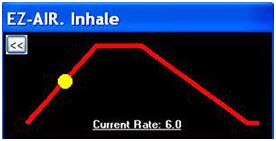
"Breathe: That’s it folks, but with a twist. We need reminders. I put a post-it with the word “Breathe” right on my computer screen. Here’s another suggestion, set an alarm for the top of the hour, when it strikes, three deep belly breathes, releasing slowly. Then hold out the last breath for a few seconds. You’ll be surprised how energizing it can be, while calming your nerves. This is the one elixir that can spark the speediest positive response to stress."This is exactly what the BFE's EZAir Plus software does. For those of you who are unfamiliar with the software, EZAir Plus is a breath pacer that allows the user to place a linegraph or bargraph on their computer screen so that breathing can be paced optimally at 6 breaths per minute. Breathing slowly seems like such an easy thing to do, but when faced with deadlines, full email in-boxes and massive to-do-lists it becomes a real challenge to remember to do it!
If you are not currently using the program, we invite you to try it free for 30-days. If you like it, you can purchase it for $19.95.
Click here to activate your trial.
Labels:
biofeedback,
breathing,
relaxation,
stress
9 December 2011
Beating Holiday Stress With Biofeedback
Every year at this time the media features articles about holidays and stress. This can indeed be a hectic time of year, but it doesn’t have to be stress filled. The Mayo Clinic’s website offers a list of coping strategies, including one that focuses on breathing:
“Take a breather. Make some time for yourself. Spending just 15 minutes alone, without distractions, may refresh you enough to handle everything you need to do. Take a walk at night and stargaze. Listen to soothing music. Find something that reduces stress by clearing your mind, slowing your breathing and restoring inner calm.” Click here for full article.
As we approach the holidays, I thought it would be a good time to remind all the followers of this blog about the BFE’s EZ-AIR PLUS software program. EZ-AIR PLUS is a software program published by the BFE to help you breathe better when sitting at your computer. It allows you to place a thin bargraph or linegraph anywhere on your computer screen to help you pace your inhalation and exhalation. You can let it run continuously on screen (with or without sound) or you can schedule "breaks" throughout your day to regulate breathing.
The Physiology of Breathing
Breathing is a natural process which occurs without conscious control. Babies and young children breathe effortlessly. Most of the movement associated with their breathing occurs primarily in the lower abdominal area. As they exhale, their abdomen (stomach) goes in slightly. When they inhale, they abdomen expand outward and to the sides. Most adults, however, no longer breathe in this healthy pattern. Instead, they hold their stomach rigid or slack and use a significant amount of upper body muscular activity to inhale.
The major muscle involved in proper breathing is called the diaphragm. This is a dome shaped muscle located beneath the ribs and above the stomach. In order to inhale, the diaphragm tightens and flattens. This activity displaces the liquid contents of the abdomen and thereby creates a larger space in the chest. As this space is created, the pressure in the atmosphere exceeds the pressure in the chest and air flows in to balance these pressures out.
To exhale, the diaphragm must relax and be raised upward, compressing the air in the chest and allowing the air to be expired. Thus, inhalation requires that the abdominal area relax and expand, while exhalation requires the abdominal area to decrease in diameter. The chest and shoulders should stay relaxed throughout the breathing cycle.
From the manual “Breathing for Health With Biofeedback” by Dr. Erik Peper
EZ-AIR PLUS. It is a great way to relax, reduce stress and a reminder to do something good for ourselves during this busy time of year!
Labels:
biofeedback,
breathing,
diaphragmatic,
stress
Subscribe to:
Posts (Atom)