26 April 2013

Integrative Medicine Software Suite


Integrative medicine is a patient centered approach that focuses on treating the person, not just the disease. Dr. Robert McCarthy recognizes the importance of doing just that. He has shared his expertise in the field with the BFE as part of its Learn From the Best program. In March, we released the Integrative Medicine software suite for Infiniti users.

The field of Integrative Medicine has grown considerably over the last decade. According to WebMD, “Both doctors and patients alike are bonding with the philosophy of integrative medicine and its whole-person approach - designed to treat the person, not just the disease. When asked about this holistic approach, Dr. McCarthy replied, “The contemporary philosophy of integrative medicine involves working directly in cooperation with traditional physicians and medical approaches. Working with the human being as one complex, interactive, biological, emotional and social system can result in enhanced health and well-being.”

Integrative Medicine Software Suite
This limited edition suite supports techniques utilized and developed by Dr. McCarthy throughout his 30 years providing assessment, diagnosis, remediation, and treatment for individuals with emotional, physical, neurological, and developmental problems. The additional documents included in this suite come directly from Dr. McCarthy’s clinic and provide a com-prehensive resource for clinicians that desire to set up their own state-of-the-art integrative medicine practice. The suite includes:
  • Psychophysiological profile assessment protocol (22min duration, with 15 activities)
  • Paradoxical Temperature Increase (PTI) assessment protocol (25min duration)
  • Excel reports that allow for easy interpretation of psychophysiological assessment and PTI assessment data (one for each protocol) and implementation of a training program.
  • Training screens categorized according to modalities, that are quick to initiate and structured to move from simple tasks to more complex training goals. Also some more specialized training screens are included for atypical training, including Z-Scores.
  • Suite documents containing over 60 files of technical & clinical information have been provided directly from Dr. McCarthy’s practice and provide any clinician with a foundation for starting their own state-of-the-art-integrative-medicine practice. 
SAMPLE SCREENS

Early Reviews of the Suite
"Dr. Robert McCarthy's Integrated Behavioral Medicine suite provides an extensive methodology for developing a very detailed psychological profile for patients. The results will allow the clinician-practitioner to know which peripheral and EEG based modalities are most relevant for biofeedback training and monitoring. Although psychophysiological profiles have been in existence since the 1940s this one is the most extensive developed so far."   - Joel F. Lubar Ph.D.

"Hats off to Dr. McCarthy on the creation of the new suite. After a thorough review of the Integrative Medicine Suite I would have to say that this is the most comprehensive suite in the BFE catalog. This is by far the best suite made available from BFE. The suite covers from initial intake, patient progress reports, simple and easy to use screens to HIPPA compliance, assessment, consent forms and more. This suite covers more than just basic screens. the written manuals plus clear and concise training screens make it something that ANY clinician using the P2 should have in their tool box."   - Brian Milstead, Bio-Medical Instruments Inc.
 

I am very impressed with the comprehensiveness and ease of use of Dr. Robert McCarthy's Integrated Behavioral Medicine suite. It helps clinicians to develop psychological profiles and clinical tests appropriate for a given patient. The integration of psychophysiology and EEG is important and this is the only suite that I know that is complete and readily usable. The manual is concise and well written and is an asset for any clinician. It will facilitate assessment and treatment and this is what the field of biofeedback needs.  - Robert W. Thatcher, Ph.D.

Introduction to the Integrative Medicine Suite
For information on the contents and features of the suite click on the video.


Introduction to Integrative Medicine Suite from Biofeedback Federation CIC on Vimeo.

About Dr. Robert McCarthy
Dr. Robert McCarthy is a Licensed and Board Certified Professional Counselor and Supervisor with over thirty-eight years experience in the assessment, diagnosis, remediation, and treatment of individuals with emotional, physical, neurological, and learning disorders. His work experience includes employment in a variety of public and private settings: County and State mental health programs, correctional facilities, educational institutions, and private practice.

Dr. McCarthy is Board Certified in Integrative Medicine by the American Association of Integrative Medicine (AAIM), a Master Addiction Counselor by the National Board for Certified Counselors, and a Board Certified Fellow in EEG and General Biofeedback with the Biofeedback Certification International Alliance. Currently, Dr. McCarthy is Executive Clinical Director of McCarthy Counseling Associates, PA, and a Consulting Staff member of Grand Strand Regional Medical Center in Myrtle Beach, South Carolina.

Upcoming Class and Case Conferences
We have just scheduled an online class for anyone in learning how the use the suite. Participants will have an opportunity to pose any questions they have to Dr. McCarthy. Also offered are case conferences during which Dr. McCarthy will present specific cases using his Integrative Medicine approach.

Integrative Medicine Online Class
Instructors: Jon Bale and Dr. Robert McCarthy
Date: June 10, 17, 24, 31, 2013
Time: 10:00-11:30 AM Eastern Time (US & Canada)

Integrative Medicine Online Case Conferences
Host: Dr. Robert McCarthy
Date: May 20, 27, June 3, 2013
Time: 10:00 - 11:00 AM Eastern Time (US & Canada)

Integrative Medicine Software Suite


For more information, feel free to contact the BFE Integrative Medicine team at reddrmccarthy@gmail.com.

14 March 2013

Tennis Anyone? New Software Suite Now Available

Those of you who attended last week's webinar "Tennis - Optimizing Performance" had a chance to become acquainted with both Stephanie Nihon, (the presenter) and the BFE's own Jon Bale, who joined Stephanie online to moderate the event. During the webinar, Stephanie shared her expertise in incorporating biofeedback and neurofeedback into the training regime for tennis players. She recently worked with the BFE to create the Tennis Performance software suite that leads the user through assessment/training protocols with screens specific to the sport.


A Bit of Background
Dr. Vietta (Sue) Wilson is well known as one of the top sport psychologists in the field of performance enhancement with biofeedback and neurofeedback. There are several clinicians who have protégéd at her side, training athletes, determining protocol specifics for individual sports and fine tuning her method. Stephanie Nihon is one of those such individuals.

Stephanie Nihon, MSc, BCIA, BCN
As a former national athlete, Ms. Nihon has been involved in optimal performance training for almost 10 years. Working closely with Dr. Wilson, as well as at Michael & Lynda Thompson's ADD Center in Toronto, Canada, she has experience in all types of sports with specialties in tennis, swimming, hockey and most recently downhill skiing. Her experience includes training Olympians, NHL players, PGA golfers and National level athletes.

The Tennis Suite was designed by Stephanie Nihon and the Biofeedback Federation of Europe (BFE) as a training tool for the performance enhancement of tennis athletes. Specific protocols are given, as well as exercises and enhancement goals. Ms. Nihon and Jon Bale, the BFE's Research Manager, both agreed that there is sometimes a lack of creativity on the part of clinicians or trainers when working with athletes. In developing the Tennis Performance software, her/our goal was to give clinicians new ways of teaching and enforcing what an athlete needs to learn.

The BFE Tennis Performance Suite
The Tennis Performance suite consists of a short 1 Hz Bins EEG Assessment, with specialized excel report, and 6 training protocols that focus on specific modalities. All training goals, exercises and feedback is done with relevance to the game of tennis.

The 1 Hz Bins EEG Assessment provides an idea of the athlete's EEG amplitudes before training, as well as points out any anomalous readings. The results are graphed in an easy-to-read excel report that is generated automatically.

The training protocols are divided according to complementary modalities are statistics. Within each protocol are multiple training goals and exercises, that go from simple to more difficult. Exercises are interspersed among the training goals to facilitate faster learning with the biofeedback/neurofeedback. Instructions are included on each training screen so that the clinician/trainer and athlete understand what the goal is and how to interact with the feedback measurements.

The BFE Tennis Performance suite is available for direct download from the BFE Online Shop. Documentation includes a software manual, clinical manual and additional reference files for exercises provide by Ms. Nihon.

Hardware/Software Requirements
The Tennis Performance suite is available for use with the ProComp Infiniti or ProComp 2 encoder and is compatible with the BioGraph Infiniti software. Sensors used for collecting data and training optimal performance include BVP for heart rate, respiration, EEG-Z for brain waves, skin conductance, MyoScan-Pro for EMG (2 for ProComp Infiniti; 1 for ProComp 2) and temperature (for ProComp Infiniti only). Download tech sheet here.

Webinar Recording Available: Tennis - Optimizing Performance
If you missed the webinar you'll be pleased to know that for a limited time, we have made the recording available at the special price of $9.95. (Regular price $29.95) Click here to purchase.


21 January 2013

ClinicalQ and BrainDryvr - Mind WorkStation Add-On

We recently notified all users of the ClinicalQ and BrainDryvr software suite about a class on the Mind WorkStation Add-On and have received a number of questions about its use. So, here's a brief description of what it is, what it does and how you can learn more about it. 

Not long ago, a few clinicians contacted us - the Biofeedback Federation of Europe's (BFE) Swingle Team - about an idea. They thoroughly appreciated Dr. Swingle's efficient ClinicalQ Assessment method and his BrainDryvr training screens, but they wanted to take the training feedback one step further. They hoped to integrate more dynamic sound and vivid visual feedback into the training process, using outside equipment. With a significant amount of work, that idea created the ClinicalQ Mind WorkStation (MWS) Add-On.

What are the advantages of the ClinicalQ Mind WorkStation Add-On?  
The MWS Add-On provides superior sound and unrivaled visual feedback, through the MWS program. The normal feedback sounds and music included in the original ClinicalQ & BrainDryvr Suite can still be used, but the MWS system can plays tones that evenly change in pitch, wave and volume. The sounds can be linked to individual EEG bandwidth amplitudes for entrainment, such that as the amplitudes go up or down, so does the sound change in stepwise manners. Individual sounds can also be muted/unmuted at will. The MWS can also use audiovisual headgear (although not required) to outrival the feedback animations of the ClinicalQ & BrainDryvr Suite. There are many additional feedback options available with the MWS program that are open for the clinician to set themselves.

Who should get the Add-On?
The Mind WorkStation Add-On can be complex for the clinicians operating their computer system. Both the Biograph Infiniti program and the MWS program are running simultaneously, since the Biograph feeds EEG data to the MWS in real-time. The MWS program has its own user interface for monitoring data and feedback.


Therapists should first be comfortable with the standard ClinicalQ & BrainDryvr Suite before they decide to embark on using the MWS. Naturally, the individual also has to purchase the MWS program to use our add-on.

How do I download the ClinicalQ Mind WorkStation Add-On? 
Please send an email to the BFE's Swingle Team (blueswingle@gmail.com) to notify them. Due to the complexity of the add-on, we are currently giving out the ClinicalQ Mind WorkStation Add-On at no charge, for anyone who signs up for the MWS online class that we are providing. The online class is 6 hours (4 x 1.5 hour sessions) of instruction guided by Elizabeth Tegan, the main software designer for the Add-On. It is the best way to take advantage of this training opportunity.The second session of the class is set two take place on Friday. Anyone who wished to join late will receive the class recording from the first lesson.

There is a change in what programs and equipment are used:  
The standard and original ClinicalQ & BrainDryvr Suite collects data using the Thought Technology-made EEG sensor(s)/encoder and then processes that raw data in the Biograph Infiniti program to yield statistics and provide feedback. The ClinicalQ MWS Add-On uses a similar process, however the statistics calculated by the Biograph Infiniti are imported in real-time to the MWS program to provide high quality sound and visual feedback. The MWS program and visual equipment is manufactured by TransparentCorp (http://www.transparentcorp.com/) and must be purchased from them. The standard Thought Technology equipment (ProComp Infiniti or ProComp 2 encoder with 2 EEG sensors, and Biograph Infiniti program) are still necessary for recording data with this add-on.


THE MIND WORKSTATION - ADD-ON
Presented by: Elizabeth Tegan
If you are interested in exploring what the Mind WorkStation add-on can do for you, we invite you to join the ongoing class followed by grand rounds sessions during which specific cases or questions can be asked of Elizabeth. Click on the links below for more details.

Mind WorkStation Class
Jan 18, Feb 1, Feb 8, Feb 15, 2013
Time: 12:00 - 1:30 PM Eastern Time (US & Canada)
$169.00

Mind WorkStation Grand Rounds
Feb 22, Mar 1, Mar 8, 2013
Time: 12:00 - 1:00  PM Eastern Time (US and Canada)
$149.00  

If you have any questions, please feel free to contact the BFE Swingle Team at blueswingle@gmail.com.

19 December 2012

Mental Conditioning for Intense Focus in Baseball


Recently I sat down with Dr. Wes Sime to ask him a few questions about an upcoming webinar "Mental Conditioning for Intense Focus in Baseball" that he will be presenting with Dr. Ben Strack. Drs. Strack and Sime have been involved in baseball for decades and they are part of a high performance training team supporting numerous elite Olympic, professional and collegiate sports teams. They are currently working with the Biofeedback Federation CIC to develop software applications for baseball.

Just prior to the interview, I read an article on the New York Times website about golfer Charlie Beljan's panic attack on the PGA Tour and his subsequent win. It's a pretty remarkable story and one that I am surprised doesn't happen more often in both professional and amateur sports. Here's an excerpt from the article with comments from golf instructor Jim McLean:

McLean, who is ranked among Golf Digest’s top five teachers nationally, said he saw panic attacks on the golf course from pros and recreational golfers alike more often than people would imagine. If it is a rare sight on the PGA Tour, he said, it is because being calm under pressure is part of the Darwinian weeding-out process in professional golf.

“Anxiety under pressure has driven a lot of golfers out of the game,” McLean said. “They’re people you don’t know of and never heard about because they couldn’t handle it. That includes some very talented guys. It’s part of the game that is underestimated and just as important as hitting the ball. It can be pretty scary, and it’s an incredible story that Charlie won.”
Dr. Sime has worked with both professional golfers and pro baseball players and believes that mental training for peak performance is as important as physical training. His training sessions are tailored to the individual athlete and include the use of biofeedback and neurofeedback. According to Dr. Sime, "Sport pychophysiology and biofeedback provide the "mind gym" training needed to shape the mental and emotional state of the player to deal with pressure and to thrive under difficult conditions."

The use of peak performance training with biofeedback has steadily increased over the years but is virtually unknown to many. So how does it work? Simply put, biofeedback is like a window into the self. A good example is stress - we all know what it feels like to be stressed, but imagine that we are actually able to "see" what is going on in our bodies when we are anxious or stressed. Typically, our respiration rate increases, our hands may become sweaty and certain muscles may become tense. Now, imagine that we can alter our response to stress. That is biofeedback.

Below Dr. Sime answers a few questions about using bio and neurofeedback as part of his training program:

Why is peak performance training important to baseball?

The 2012 World Series revealed more than ever that teams with the largest payrolls, the best hitters and the most talented pitchers do not always produce dominant results. The game of baseball is more than raw physical power and technique. Not surprisingly, getting results comes down to the individual player's and team's ability to overcome adversity, anxiety and to maintain confidence without recent hits and runs to build high expectations. Physical strength and conditioning make an important contribution to the game, but the mental conditioning for intense focus, together with calmness and composure to optimize reaction time is equally important.

What does a typical training session involve?
I begin by assessing the individual needs of the player. It usually starts with "I’ve got to get better at hitting" or "I really want to get around on the ball faster," or "I want to be less nervous and more confident in the batter’s box.” We’re really problem solving and we have this sophisticated technology that allows the player to look under the hood and see along with us what’s going on so we can all share in the solution.

What signals do you monitor?

In the beginning, it is important to capture the athlete’s attention and get them interested in doing this with very simple, straight forward illustrations. I usually start with monitoring respiration and heart rate variability or the combination of skin conductance and skin temperature so they can see when they’re stressed or when they’re in coherence. Then, I want them to be facing a simulated challenge while monitoring coherence and we have this technology in the BFE ProBaseball suite which is called is ReactTrak.

ReactTrak is a simple game that requires the player to keep a ball within a specific field of play using the mouse on the computer. The player needs to stay focused and very intent on tracking the ball on screen just like tracking the baseball out of the pitcher’s hand. We want the biofeedback to be accounting for and helping us condition toward better performance on the next trial so we can explain why the player lost that previous event on the ReactTrak. For example, the player may discover that he was getting too uptight or his breathing was messed up or whatever. So to answer your question on what signals are used, respiration and heart rate to begin with, then skin conductance and temperature, followed by muscle tension and at the most sophisticated level, the brainwaves become important.

How does that translate to hitting?
The goal in baseball hitting is to locate the ball coming out of the pitchers hand at lightning speed and tracking that ball whether it's going straight or it's breaking to one direction or another. The additional challenge is to bring the bat around with sufficient force and with perfect timing to meet the ball squarely. This complex motor learning task requires exquisite eye/hand and body coordination to bring the bat around at the right moment in time and on the same plane as the ball is crossing the plate. It's all about hand and eye coordination and that's what the ReactTrak game teaches. The benefit of using the game is that the player learns to do it all in a relaxed and focused state.

How do the players react to the training?
Part of the challenge in implementing program is presenting the relevance of the training in such a compelling manner that players and the coaching staff get on board. If they aren't familiar with biofeedback, they may perceive it as too complicated, too "wired up" and might feel that it’s a little out of their control. However, when we get access to players, one-on-one, really wanting to get better at this game, then the instrumented, sensor and game driven training in the office comes together very well.

This type of training is just another tool in the arsenal. If you think about it, 30-40 years ago -- no one in any sport did any weightlifting or training and conditioning...they just did their sport. And of course now - strength and conditioning, the weight room is just so sophisticated and they’ve got full time people aligned as personal trainers making sure that the work is done properly. Going forward, I think it's going to be the same with regard to mental training. We have to be prepared to use the latest technology and we have to be the interface between the athlete and the equipment thus demonstrating how and work it works in preparation for The Game.

What advice do you have for biofeedback professionals interested in entering this field?
If you’re a biofeedback person, in your community, go find a sport psychologist. If you’re a sport psychologist, and you don’t know biofeedback, go find a biofeedback person in your community and collaborate together. You need to partner up with somebody where you can help each other.

..........................................................................

If you're a trainer, coach, sports agent or a biofeedback professional interested in learning more about Dr. Sime's techniques, we invite you to attend an upcoming webinar where he and colleague Dr. Ben Strack will discuss mental conditioning for baseball.

Mental Conditioning for Intense Focus in Baseball
Date: January 18, 2013
Time: 11:00 AM - 12:00 PM (Eastern Time, US & Canada)
Presented by: Dr. Wes Sime and Dr. Ben Strack

For further information, contact the BFE ProBaseball team at blueprobaseball@gmail.com.

..........................................................................

Dr. Ben Strack, Ph.D.
Dr. Ben Strack is a licensed psychologist and a certified sport psychology consultant (CC-AASP). He is an adjunct faculty member at Argosy University where he teaches sport psychology classes. In his clinical/sports practice (Newport Beach & Santa Ana, CA) he consults with professional athletes (MLB, NHL), Olympic athletes (USA Women’s Indoor Volleyball; Swimming), college, and youth athletes.

Dr. Strack is author/editor of the sport psychology book “Applications of biofeedback and neurofeedback in sport psychology” (2011). He is a former division I college baseball player and founding partner of Proball Inc., private baseball academy. During the 1999 and 2000 MLB seasons, he was the batting practice pitcher for the Anaheim Angels. From 1999 to 2004, he was hand-picked to pitch in the MLB Players’ Association and ESPN’s Big League Challenge Home Run Contests where he was the personal pitcher for Barry Bonds, Alex Rodriguez, Raphael Palmeiro, Jose Canseco, Shawn Green, Magglio Ordonez, Andruw Jones, and Troy Glaus.

Dr. Strack is a United States Olympic Committee (USOC) Sport Psychology Registry Member, board member of the Orange County Psychological Association and a co-chairperson for the Optimal Performance/Functioning division of the Association of Applied Psychophysiology and Biofeedback. He is also an active member of the American Psychological Association (APA) and the Association for Applied Sport Psychology (AASP).  

Wes Sime, Ph.D., MPH, BCB, BCN
A pioneer in the field of Applied Sport Psychophysiology, Dr. Sime has helped to develop the technology to measure the over effort and "muscling up tension" that occurs in the batters box while baseball players face tough pitching. A former Sport Psychologist for the Omaha Royals AAA team, Wes has worked with major league players as well as several Olympic Teams. He has worked with PGA golfers including Payne Stewart, Corey Pavin, Troy Matteson and numerous others striving to help make sport psychology come to life in professional golf. Currently, Wes is a health psychologist and sport psychologist at First Step Wellness in Lincoln, Nebraska. He is the originator of the ProGolf concept and has worked Jane Arave in developing the ProGolf Suite for BFE.

.

14 December 2012

Coping With Workplace Stress During the Holiday Season

I recently read a timely article by Judy Martin in Forbes magazine on "5 Keys to Transform Workplace Holiday Stress from the Inside Out". (Read the full article here.) This time of year can be even more hectic than usual with "out of the office" responsibilities demanding more of our time and thoughts. I particularly liked Judy's second point in the article:
"Breathe: That’s it folks, but with a twist. We need reminders. I put a post-it with the word “Breathe” right on my computer screen. Here’s another suggestion, set an alarm for the top of the hour, when it strikes, three deep belly breathes, releasing slowly. Then hold out the last breath for a few seconds. You’ll be surprised how energizing it can be, while calming your nerves. This is the one elixir that can spark the speediest positive response to stress."
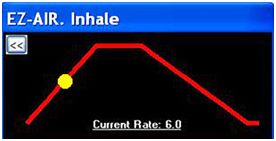
This is exactly what the BFE's EZAir Plus software does. For those of you who are unfamiliar with the software, EZAir Plus is a breath pacer that allows the user to place a linegraph or bargraph on their computer screen so that breathing can be paced optimally at 6 breaths per minute. Breathing slowly seems like such an easy thing to do, but when faced with deadlines, full email in-boxes and massive to-do-lists it becomes a real challenge to remember to do it!

 I think the nicest feature of the software is that it can be set up to pop up on screen once an hour for five minutes thereby providing the reminder that Judy mentions in her article. And when the software starts, most often you will see that you are breathing much faster than you think. A couple minutes following along with EZAir and your breathing returns to the optimal rate.


If you are not currently using the program, we invite you to try it free for 30-days. If you like it, you can purchase it for $19.95.
Click here to activate your trial.

15 October 2012

Biofeedback for Extreme Situations

Do you think your job is stressful?
Most of us would probably answer yes, but imagine if this was your job...

(Though this daring rescue at sea was reported in the news, what most people don’t know is that on their way to the rescue, the Dutch Special Forces were staying calm thanks in part to tactical breathing skills they learned from a Dutch biofeedback expert.)


Stress has a great impact on the quality of lives of the men and women in uniform that serve and protect communities. Biofeedback offers ways to measure stress and guide professionals that work with people in extreme situations. The BFE Military and Security team has recently released software to train professionals working with military, security and law enforcement agencies. The suite, compatible with the BioGraph Infiniti system, was designed by an international team led Dr. Henk Kraaijenhof and based on his experience training military and law enforcement personnel.

Dr. Henk Kraaijenhof
Dr. Kraajienhof is a biofeedback expert based in the Netherlands. Henk has trained Olympic gold medalists and top professionals and now also trains special forces in tactical breathing for performance under pressure. The software is just one piece of an education and training program for professionals interested in learning more about biofeedback.

Starting in January of 2013, Dr. Kraaijenhof will be hosting a series of three online grand rounds sessions along with BFE Military and Security team member Yuval Oded who lends his expertise based on his biofeedback assisted MentalGym™ project. During these sessions, participants will be able to present specific cases or pose questions to the group for discussion.

If you would like to know a little bit more about the suite and how it works, we have made available a recent webinar presented by the BFE Research Manager, Jon Bale. In the recording, Jon reviews the software and documents included in the suite. He will also demonstrate the assessment and training protocols. At the end of the webinar, participants will be able to identify one measure of biofeedback and neurofeedback, recognize the use and benefit of different types of assessment, learn the benefit of using different stressors to elicit a physiological change.

If you are interested in learning more about this interesting use of biofeedback, feel free to contact the BFE Military and Security team at www. redmilitarysecurity@gmail.com.

Visit the BFE Online Shop for full descriptions of the products listed above:
Military and Security Software Suite
Military and Law Enforcement - Grand Rounds
Intro to the Military and Law Enforcement Suite - Webinar Recording


10 October 2012

Biofeedback for Mental Health

I blog for World Mental Health Day


First, I would like to commend the folks at the Carter Center for their ongoing efforts to draw attention to mental health concerns while reducing the stigma that is associated with them and to PsychCentral for the great work they do. Thanks also to everyone who has taken the time to share their own insights by joining the “blog party”. What a great concept!

In my role as Education Manager at the BFE, I have had the opportunity to learn about the work of many mental health professionals around the world who have incorporated biofeedback and neurofeedback into their practices. Our field has such great potential but remains virtually unknown to so many. 

So what is biofeedback?
The AAPB (Association for Applied Psychophysiology and Biofeedback) website sums it up nicely:

“Biofeedback is a process that enables an individual to learn how to change physiological activity for the purposes of improving health and performance. Precise instruments measure physiological activity such as brainwaves, heart function, breathing, muscle activity, and skin temperature. These instruments rapidly and accurately "feed back" information to the user. The presentation of this information — often in conjunction with changes in thinking, emotions, and behavior — supports desired physiological changes. Over time, these changes can endure without continued use of an instrument.”

Approved May 18, 2008 by:
Association for Applied Psychophysiology and Biofeedback (AAPB)
Biofeedback Certification International Alliance (BCIA)
International Society for Neurofeedback and Research (ISNR)

Quite simply, biofeedback is like a window into the self. A good example to illustrate this is stress. In today’s fast paced world we are all familiar with stress and the negative impact it can have on our health. Most people can identify when they are feeling stressed, but may not be aware that during stressful periods their heart rate speeds up, their respiration rate increases and their muscles may be tense. With knowledge of these physiological changes comes the power to regulate them.  

Biofeedback has been widely used by a variety of health professionals in the treatment of disorders such as anxiety, depression, ADHD, trauma and PTSD to name a few.  In fact the focus of the upcoming North Carolina Biofeedback Society’s annual meeting (for which we are a sponsor) is “Trauma and the Mind-Body Connection”.  The conference, taking place November 2-4, 2012, provides a great opportunity for mental health providers to learn how they can incorporate biofeedback into their practice.

Other good resources are the AAPB (Association for Applied Psychophysiology and Biofeedback), the ISNR (International Society for Neurofeedback and Research) and the BCIA (Biofeedback Certification International Alliance). All three websites provide a wealth of information for professionals as well as anyone interested in learning more about this fascinating field.  Also, check out this link for a crash course on biofeedback: https://www.youtube.com/watch?v=1u1v3xRCqu8 

A Bit About Us...
The BFE Learn From the Best program provides continuing education via conferences, seminars, workshops, internet courses, and software for professionals around the world. Content is developed independently by International Research & Education Project teams. Financial support comes from the Biofeedback Federation CIC, a non-profit Community Interest Corporation located in the UK. For more information, visit the BFE Online Shop. The next BFE Annual Conference is scheduled to take place February 11-15, 2014 in Venice, Italy.

Please feel free to contact me if you would like more information.
Carol Meyers
Education Manager
education@bfe.org
Related Posts Plugin for WordPress, Blogger...